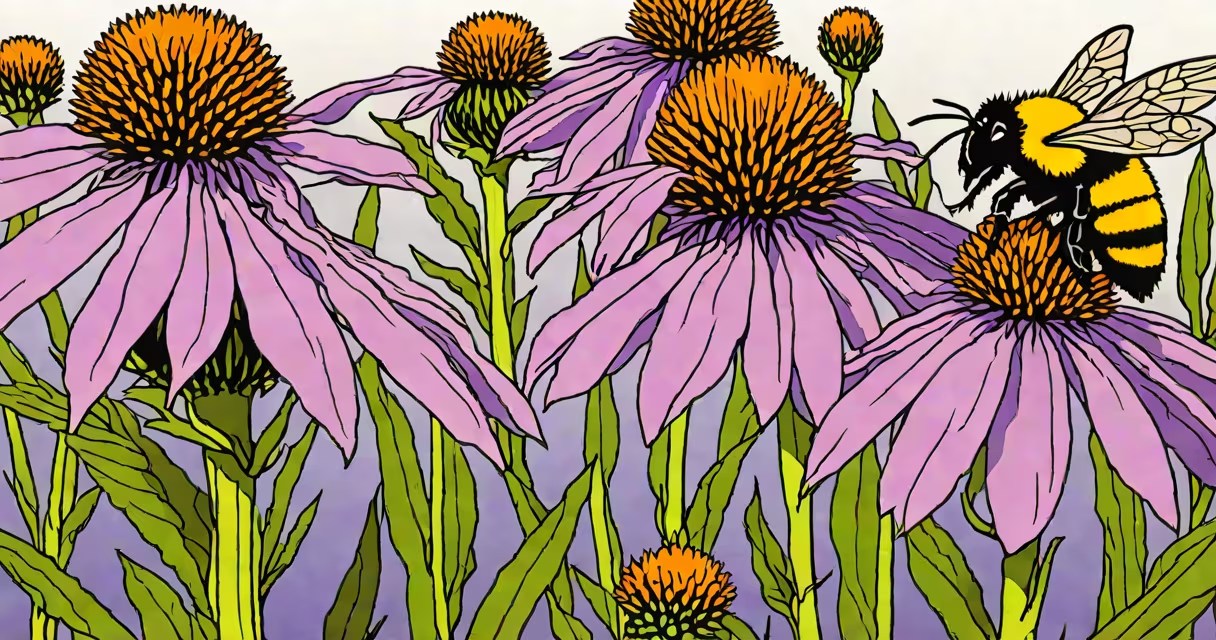
The rusty patched bumblebee (Bombus affinis) is the first native bee officially listed as endangered in the U.S., with other species like the Franklin's bumblebee (Bombus franklini) and several Hawaiian yellow-faced bees (Hylaeus spp.) facing severe declines. These losses stem from habitat destruction, pesticide use, and climate change.
Bees don't go extinct suddenly. Declines happen gradually due to compounded stressors:
For example, the Franklin's bumblebee was last seen in 2006. Its range in southern Oregon and northern California has since fallen silent.
| Species | Region | Year Last Recorded |
|---|---|---|
| Rusty patched bumblebee | Midwestern and northeastern U.S. | 2013 (declining) |
| Franklin's bumblebee | Southern Oregon/northern California | 2006 |
| Hawaiian yellow-faced bees | Hawaiian Islands | 2016 (some species) |
| Western bumblebee | Western North America | 2019 (declining) |
Note: Some species like the western bumblebee remain common in certain areas but have lost 90% of their historic range.
Bees pollinate 75% of global food crops. The U.S. Department of Agriculture estimates bee pollination contributes $15 billion annually. Without bees, fruits, nuts, and vegetables would become scarce and expensive.
I saw this firsthand while visiting a California almond farm. Orchards rely entirely on honeybees for pollination. Without them, the trees wouldn't produce.
People often confuse endangered bees with Africanized "killer" bees, which are invasive but not endangered. Honeybees (Apis mellifera) are managed by humans and not truly wild, though their colonies also face threats.
Another myth is that only honeybees matter. Wild bees like bumblebees are actually more efficient pollinators for many plants. Their decline could trigger cascading system failures.
To learn about other endangered animals, see which animals are going extinct.