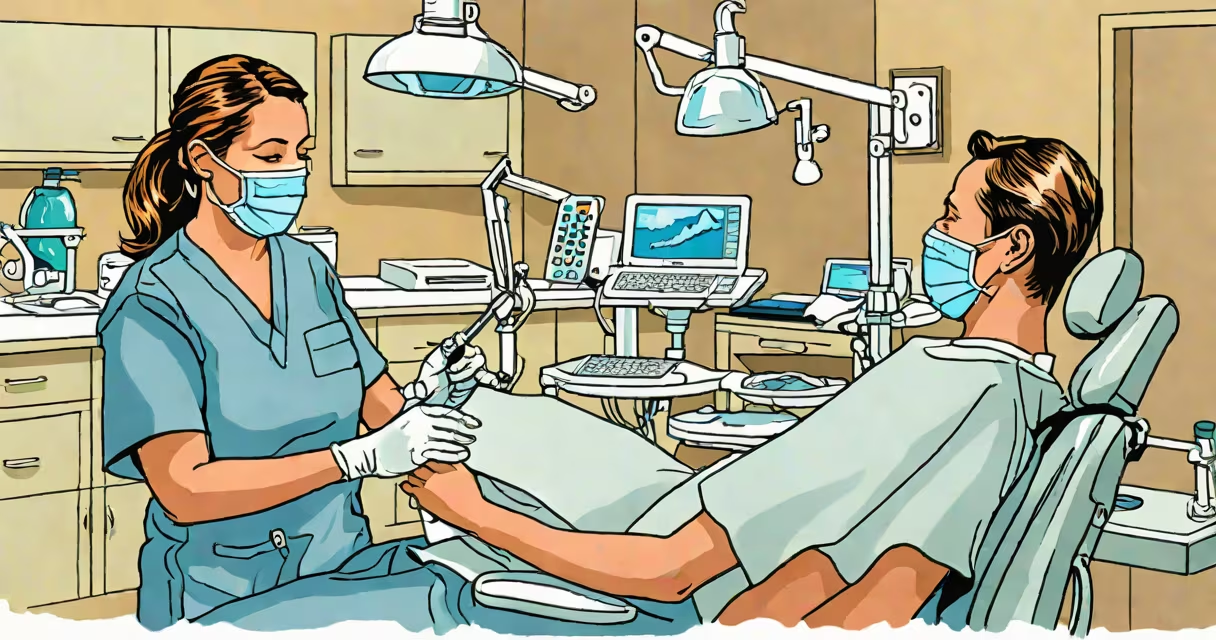
A dental assistant supports dentists by performing clinical and administrative tasks, from patient care to equipment sterilization. They ensure dental offices run smoothly, enabling dentists to focus on treatments.
Dental assistants handle several clinical tasks. They prepare patients for treatments, including positioning them in the chair and covering them with protective drapes. During procedures, they assist dentists by handing them instruments, drying patients' mouths, and suctioning excess saliva or water.
They also help with dental X-rays. This involves preparing the X-ray machine, positioning the film or sensor in the patient's mouth, and developing the images. Some states allow dental assistants to take bitewing X-rays under a dentist's supervision.
Dental assistants may also remove sutures and apply topical anesthetic to a patient's gums. They teach patients how to care for their teeth and gums after certain treatments, such as the placement of temporary fillings or crowns.
Dental assistants manage administrative duties too. They schedule appointments, greet patients, and maintain patient records. They also handle billing and payment processing.
They order and manage dental supplies inventory. This includes placing orders, receiving shipments, and storing supplies properly. They also sterilize and disinfect instruments and equipment to prevent infections.
Dental assistants may also perform lab tasks, such as pouring plaster into dental impressions to create models of patients' teeth. They also clean and polish removable appliances, such as dentures.
Some dental assistants specialize in specific areas. Orthodontic assistants work with orthodontists to help straighten patients' teeth using braces or aligners. They adjust wires, change brackets, and remove arch wires.
Pediatric dental assistants work with dentists who specialize in treating children. They create a friendly and welcoming environment for young patients and help them feel comfortable during treatments.
Dental assistants in oral surgery practices help surgeons with extractions, implants, and other surgical procedures. They prepare the operating room, assist during surgeries, and monitor patients' important signs.
Most dental assistants have a postsecondary education, such as a certificate or associate degree in dental assisting. These programs typically take one to two years to complete and include classroom and laboratory coursework in dental sciences and clinical training.
The Commission on Dental Accreditation accredits about 275 dental assisting programs in the United States. Graduates of these programs are eligible to take the Certified Dental Assistant (CDA) exam offered by the Dental Assisting National Board (DANB).
Some states require dental assistants to be licensed or registered. Requirements vary by state but typically include completing an accredited program and passing a state-specific exam.
Dental assistants work in different settings, including private dental practices, dental clinics, and hospitals. They typically work full time, and some work part time or evenings and weekends to accommodate patients' schedules.
According to the U.S. Bureau of Labor Statistics, employment of dental assistants is projected to grow 10 percent, faster than the average for all occupations. This growth is due to increasing demand for dental care as the population ages and as more people keep their natural teeth longer.
Dental assistants play a important role in dental offices. They support dentists by performing clinical and administrative tasks, enabling dentists to focus on treatments. Their work helps dental offices run smoothly and that patients receive high-quality care.