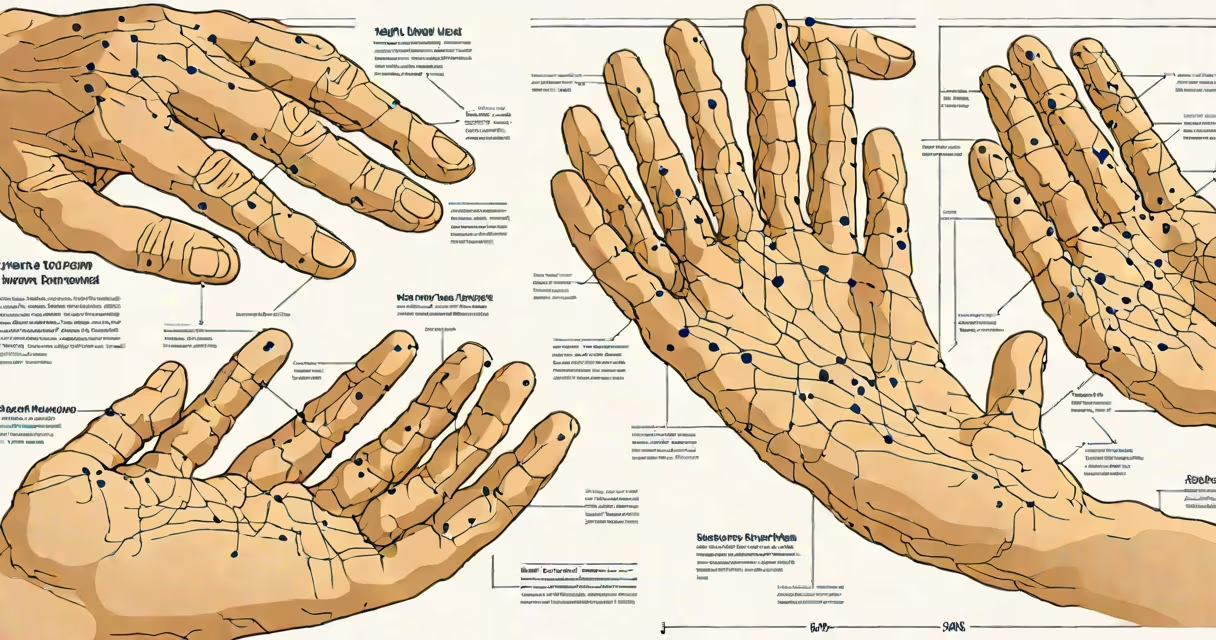
Age spots, also called liver spots or solar lentigines, are flat, dark patches that appear on sun-exposed areas like hands. They form when melanin, the pigment that gives skin its color, clumps together due to prolonged UV exposure.
UV radiation from sunlight breaks down cells in the skin that produce melanin. As skin ages, it loses its ability to repair this damage efficiently, leading to melanin buildup in concentrated areas. Unlike freckles, which fade, age spots persist because the damaged cells continue producing excess pigment.
| Type | Appearance | Common Locations |
|---|---|---|
| Solar lentigines | Small, round, brown or tan spots | Backs of hands, forearms, face |
| Seborrheic keratoses | Thick, waxy, dark patches | Hands, chest, back |
Hands are particularly vulnerable because they're frequently exposed to sunlight without protection. A study published in the Journal of Investigative Dermatology found that chronic UV exposure accounts for 90% of visible aging signs on hands. Even short daily exposures add up over decades.
Contrary to popular belief, age spots aren't caused by liver problems. The name "liver spots" is a misnomer from early 20th-century medicine when doctors didn't understand skin pigmentation well. True liver conditions don't create these spots.
To minimize age spots, apply broad-spectrum SPF 30+ sunscreen daily, even on cloudy days. Wear gloves when gardening or doing outdoor work. For existing spots, treatments like cryotherapy, laser therapy, or prescription creams with retinoids can lighten them.
I noticed my first age spots in my late 40s despite using sunscreen. A dermatologist recommended adding a wide-brimmed hat and UV-protective driving gloves to my routine. Within six months, new spots stopped forming, though old ones remained.
Most age spots are harmless, but consult a doctor if spots:
These could indicate skin cancer. Early detection improves treatment outcomes.