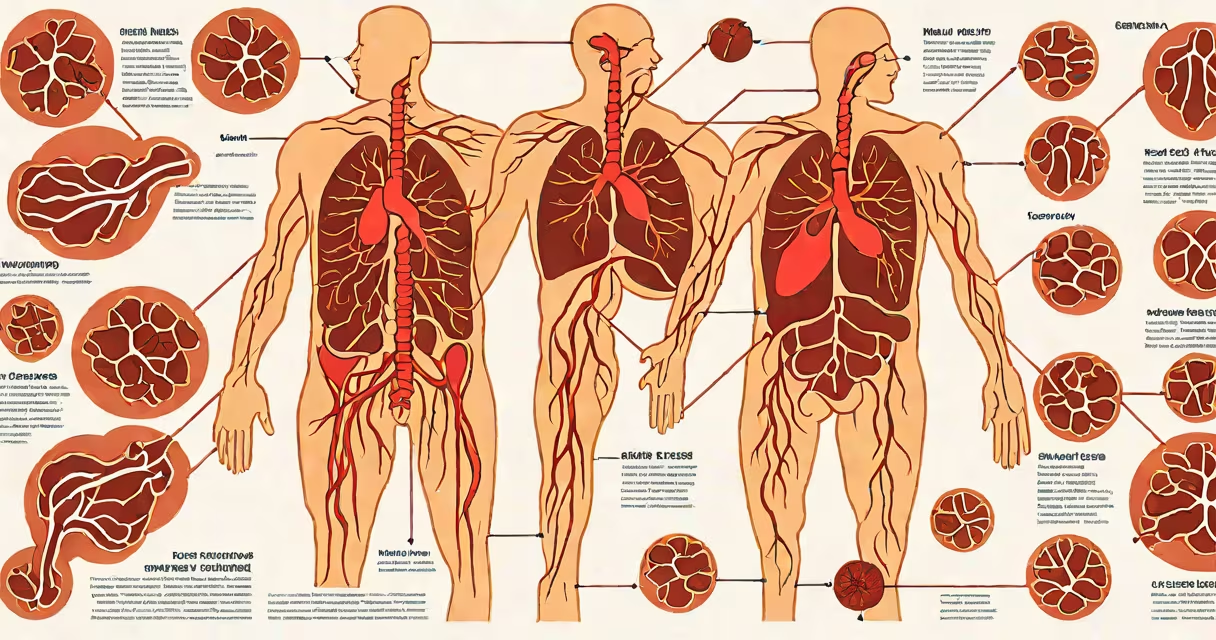
Blood clots in the lungs (pulmonary embolism) and legs (deep vein thrombosis) form when blood thickens and clumps inside veins. These clots can disrupt blood flow, causing serious health risks. Understanding their causes helps prevent life-threatening complications.
Clots develop when blood changes during clotting. This process normally stops bleeding after injury, but clots can form unnecessarily in veins due to slow blood flow, vessel damage, or hypercoagulability (excessive clotting). The most common sites are deep leg veins and lung arteries.
| Type | Location | Common Cause |
|---|---|---|
| Deep Vein Thrombosis (DVT) | Legs (often calves or thighs) | Prolonged immobility, injury, or medical conditions |
| Pulmonary Embolism (PE) | Lungs | DVT clots breaking loose and traveling to lungs |
I once treated a patient with DVT after a long flight. His calf swelling and pain revealed a clot, which we resolved with anticoagulants. This case highlighted how travel-related immobility can trigger clots.
Leg clots may cause swelling, pain, or redness. Lung clots often produce sharp chest pain, shortness of breath, or coughing (sometimes with blood). Untreated clots can lead to pulmonary embolism, stroke, or even death.
Clots are often mistaken for muscle cramps or minor injuries. However, sudden chest pain or difficulty breathing requires immediate medical attention. Unlike muscle cramps, clots persist and worsen over time.
Prevent clots by staying active, staying hydrated, and avoiding tight clothing. Anticoagulant medications like warfarin or heparin treat existing clots. Compression stockings help prevent leg clots.
For those at high risk, doctors may recommend lifestyle changes or medications. Regular movement during long trips and avoiding prolonged sitting can reduce clot risks.
Blood clots in lungs and legs are serious but manageable. Recognizing risks and symptoms helps prevent complications. If you suspect a clot, seek medical advice promptly.