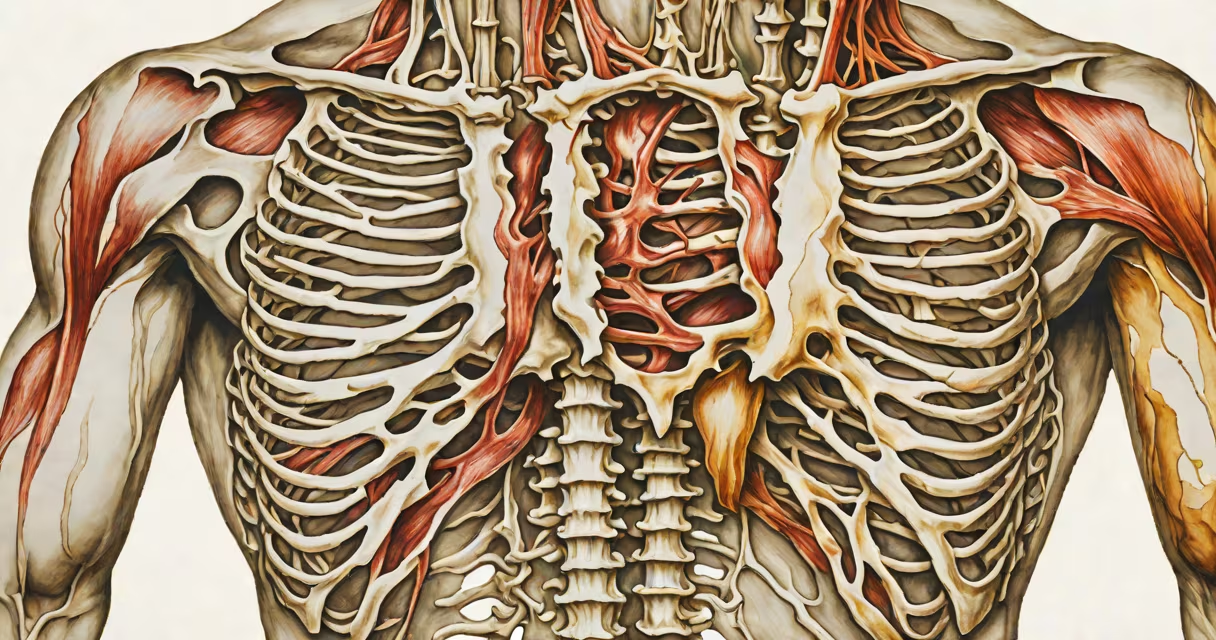
Upper chest soreness typically results from muscle strain, bone-related issues, or underlying medical conditions affecting the chest wall, ribs, or nearby structures. The upper chest includes the pectoral muscles, intercostal muscles between the ribs, and the sternum.
The most frequent causes of upper chest soreness fall into three categories: muscle-related, bone-related, and medical conditions.
Muscle strains or overuse often lead to upper chest soreness. The pectoral muscles (chest muscles) and intercostal muscles (between the ribs) can become strained from heavy lifting, intense exercise, or poor posture.
For example, bench pressing with improper form commonly strains the upper chest muscles. Intercostal muscle strain may cause sharp pain when breathing deeply or coughing.
Conditions affecting the ribs, sternum, or spine can cause upper chest soreness. Costochondritis, inflammation of the cartilage connecting ribs to the sternum, is a frequent cause of sharp, localized chest pain. Rib fractures or bone pain in upper chest from conditions like osteoporosis may also contribute.
A study published in the Journal of Clinical Medicine found that costochondritis accounts for up to 30% of non-cardiac chest pain cases.
Underlying medical conditions, such as acid reflux or respiratory infections, can cause referred pain in the upper chest. Heartburn from gastroesophageal reflux disease (GERD) may feel like chest tightness or soreness. Respiratory infections like pneumonia or bronchitis can irritate the intercostal muscles, leading to discomfort.
Seek medical attention if upper chest soreness persists for more than a few days, worsens over time, or occurs with other symptoms like shortness of breath, dizziness, or nausea. These could indicate a more serious condition requiring evaluation.
Treatment depends on the cause. Rest, ice, and over-the-counter pain relievers often help muscle strains. Physical therapy may improve posture and strengthen weakened muscles. For costochondritis, doctors may recommend anti-inflammatory medications or gentle stretching exercises.
Prevent upper chest soreness by maintaining proper form during exercise, avoiding sudden heavy lifting, and managing stress to reduce muscle tension.
Many people assume upper chest soreness always signals a heart problem. However, cardiac-related chest pain typically feels like pressure, squeezing, or fullness rather than localized soreness. Heart attack symptoms often include pain radiating to the left arm, jaw, or back.
Last winter, I developed sharp upper chest soreness after shoveling snow. The pain worsened with deep breaths and lasted for three days. A doctor diagnosed intercostal muscle strain and recommended rest, heat therapy, and gentle stretching. The soreness resolved within a week.
Upper chest soreness usually results from muscle strain, bone issues, or medical conditions. Most cases resolve with rest and home care, but persistent or severe pain warrants medical evaluation. Understanding the likely causes helps determine appropriate treatment.