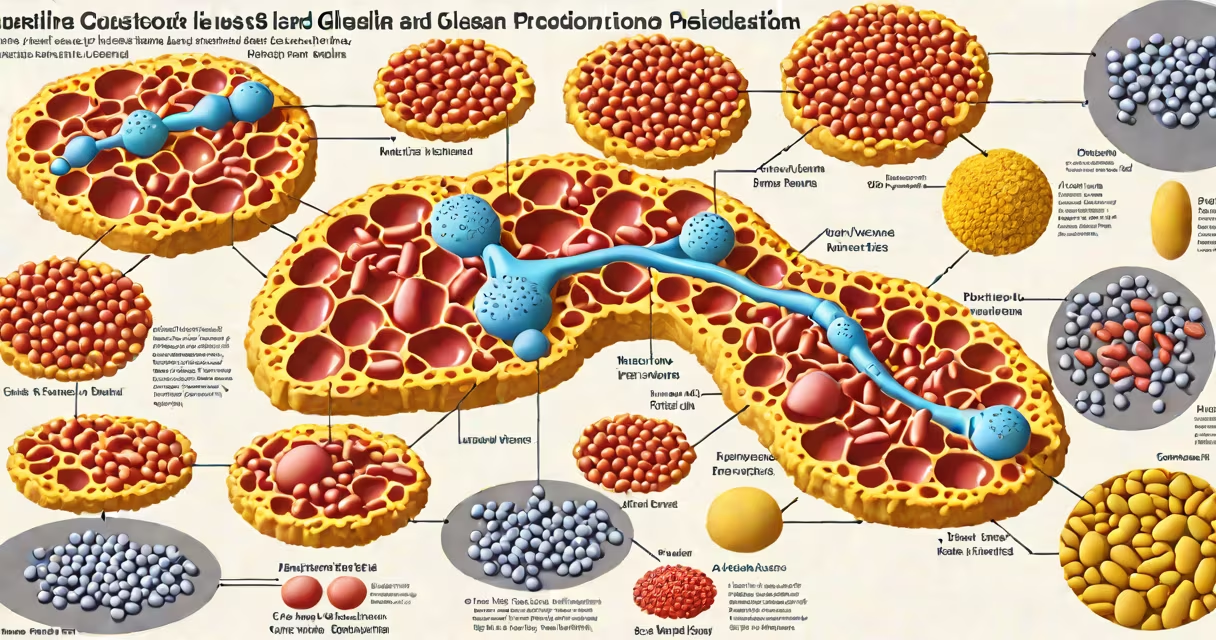
Insulin and glucagon production is primarily controlled by specialized cells in the pancreas called islets of Langerhans. These hormones regulate blood sugar levels through opposing actions: insulin lowers glucose while glucagon raises it.
The pancreas contains two key cell types responsible for hormone production:
These cells constantly monitor blood glucose levels and adjust hormone secretion accordingly. A healthy pancreas maintains a balance between these two hormones to prevent dangerous fluctuations in blood sugar.
When blood glucose rises after eating, beta cells detect the increase and release insulin. This hormone helps cells absorb glucose from the bloodstream. Conversely, when blood sugar falls between meals, alpha cells release glucagon to prompt the liver to release stored glucose.
This system operates through a negative feedback loop where rising glucose triggers insulin release, which then lowers glucose levels. When glucose falls too low, glucagon is secreted to raise them back to normal levels.
While blood glucose is the primary regulator, other factors influence hormone production:
Many people confuse insulin and glucagon's roles or think they work independently. In reality, they function as a coordinated system with constant cross-regulation. Another misconception is that only food intake affects these hormones - actually, stress and exercise impact their production as well.
For example, during intense exercise, glucagon levels rise to provide energy to working muscles, even if blood glucose is normal. This demonstrates how the system adapts to different physiological demands beyond just maintaining blood sugar levels.
Understanding what controls insulin and glucagon production is important for managing diabetes. In type 1 diabetes, beta cells are destroyed, leading to insulin deficiency. Type 2 diabetes involves insulin resistance where cells don't respond properly to insulin, often accompanied by abnormal glucagon levels.
Researchers are developing artificial pancreas systems that mimic this natural regulatory process. These devices combine continuous glucose monitoring with automated insulin delivery, potentially revolutionizing diabetes management.