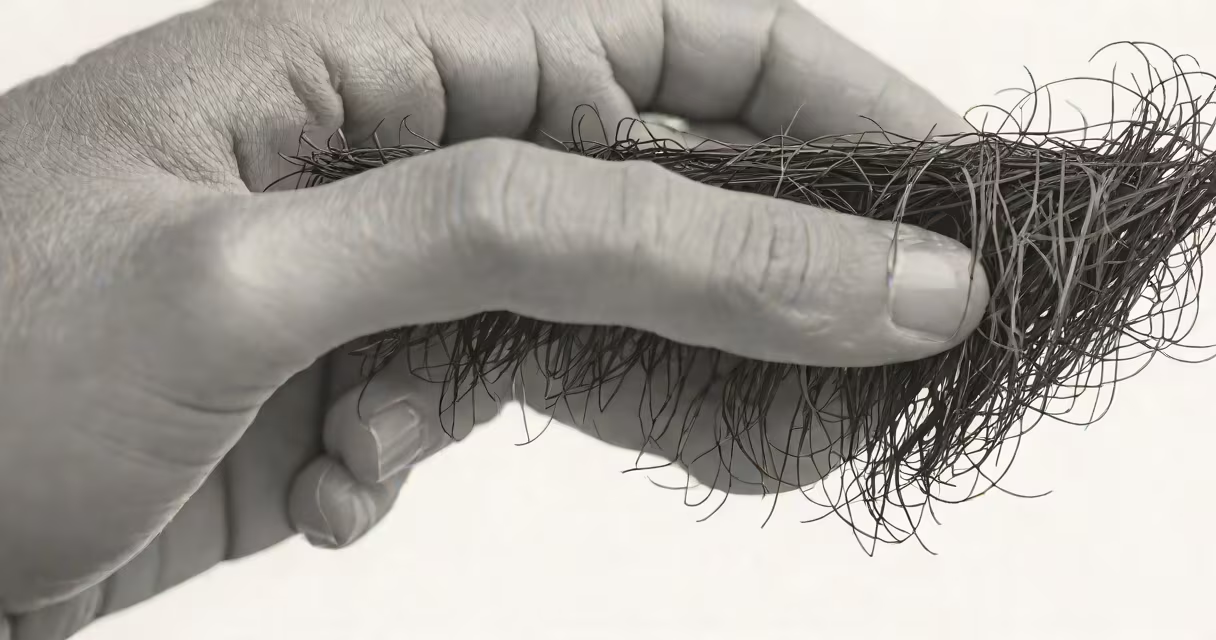
Hair loss results from a mix of genetic, environmental, and health-related factors. The most common cause is androgenetic alopecia, a hereditary condition affecting both men and women.
Androgenetic alopecia, or pattern baldness, accounts for about 95% of hair loss cases. It's triggered by hormones called androgens, which shrink hair follicles over time. This process often starts in a person's 30s or 40s but can begin earlier.
For men, this typically manifests as a receding hairline and bald spot on the crown. Women usually experience thinning across the scalp. Genetics determine sensitivity to androgens, making family history a strong predictor of hair loss.
| Type | Cause | Common Age Range |
|---|---|---|
| Androgenetic Alopecia | Genetics and hormones | 30s-60s |
| Alopecia Areata | Autoimmune attack on hair follicles | Childhood to adulthood |
| Telogen Effluvium | Stress, illness, or nutrient deficiency | Any age |
Stress, poor diet, and harsh hair treatments can accelerate hair loss. Chronic stress disrupts the hair growth cycle, pushing follicles into a resting phase where they fall out. Nutrient deficiencies, particularly in iron, zinc, and vitamins B and D, also contribute.
Harsh chemical treatments, tight hairstyles, and excessive heat styling damage hair follicles, leading to breakage and thinning. Smoking and excessive alcohol consumption may worsen hair loss by reducing blood flow to the scalp.
Autoimmune diseases like alopecia areata cause patchy hair loss due to immune system attacks on hair follicles. Scalp infections, such as ringworm, can lead to temporary hair loss. Chronic illnesses, including thyroid disorders and diabetes, often disrupt hair growth.
While not all hair loss is preventable, managing stress, eating a balanced diet, and avoiding harsh hair treatments can help. Treatments like minoxidil and finasteride slow hair loss in some people. For others, procedures like hair transplants or laser therapy offer solutions.
If hair loss is sudden or severe, consulting a dermatologist is important. Early intervention can sometimes reverse or halt progression. Understanding what contributes to hair loss helps in taking proactive steps toward maintaining healthy hair.