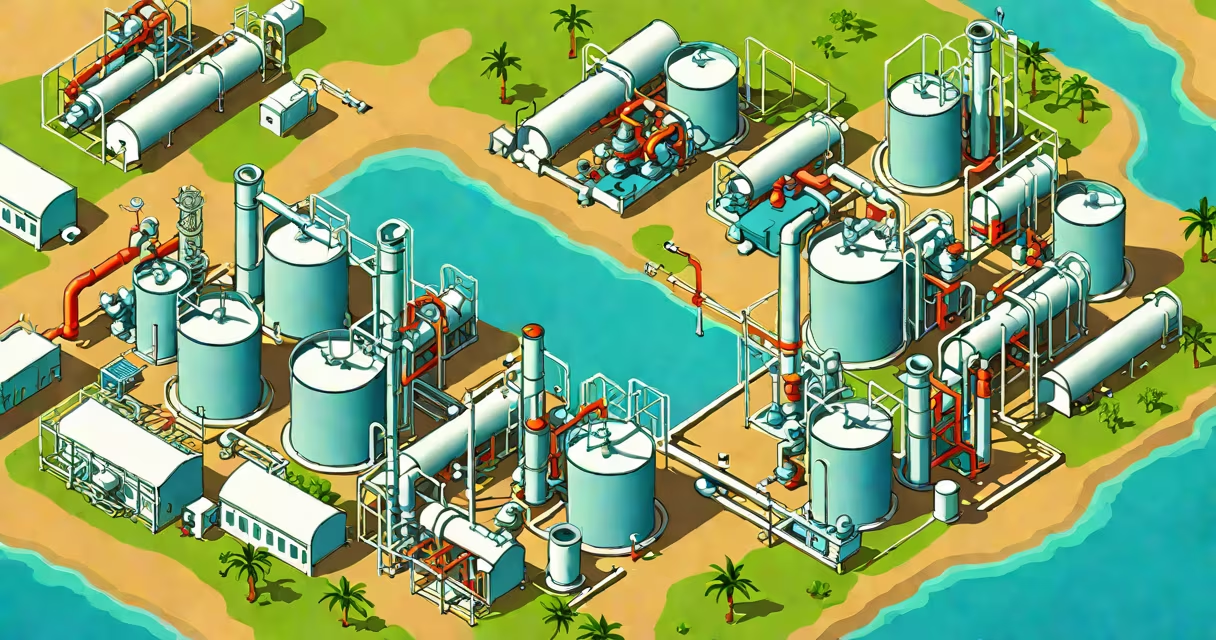
Desalination plants remove salt freshwater, then dispose of the concentrated brine through controlled release into oceans or evaporation ponds.
Most desalination plants use reverse osmosis, where seawater passes through semipermeable membranes under high pressure. These membranes allow water molecules to pass while blocking salt ions. The process produces two streams: fresh water and concentrated brine containing 40-60% salinity, nearly double the ocean's natural level.
| Method | Description | Environmental Impact |
|---|---|---|
| Surface Water Discharge | Releasing brine into oceans through outfall pipes | Can create dense plumes that settle near the seafloor |
| Deep Water Discharge | Releasing brine at greater depths (typically 20-30 meters) | Reduces surface impact but may affect deepwater ecosystems |
| Evaporation Ponds | Storing brine in shallow ponds to evaporate | Requires large land areas and creates air pollution |
| Zero Liquid Discharge | Crystallizing salt for reuse or safe disposal | High energy consumption and cost |
Over 16,000 desalination plants operate worldwide, primarily in water-scarce regions like the Middle East, Australia, and California. These plants supply freshwater for drinking, agriculture, and industry where traditional water sources are insufficient or unreliable.
Many assume brine is simply "dumped" into the ocean without consequences. In reality, responsible plants use diffuser systems to dilute brine and minimize environmental impact. However, improper disposal can cause local pollution, harm marine life, and disrupt ecosystems.
For example, a study published in Water Research found that brine discharge from desalination plants in Australia increased salinity levels in nearby marine environments by up to 30%. This can stress or kill sensitive organisms and alter food chains.
The U.S. Environmental Protection Agency requires desalination plants to obtain permits under the Clean Water Act. These permits specify discharge limits and monitoring requirements. Some countries mandate the use of diffuser systems to disperse brine effectively.
In my experience working with coastal communities, the most effective solutions combine proper brine disposal with environmental monitoring. For instance, the Carlsbad Desalination Plant in California uses a 1-mile-long diffuser pipe to release brine at a depth of 180 feet, minimizing surface impacts.