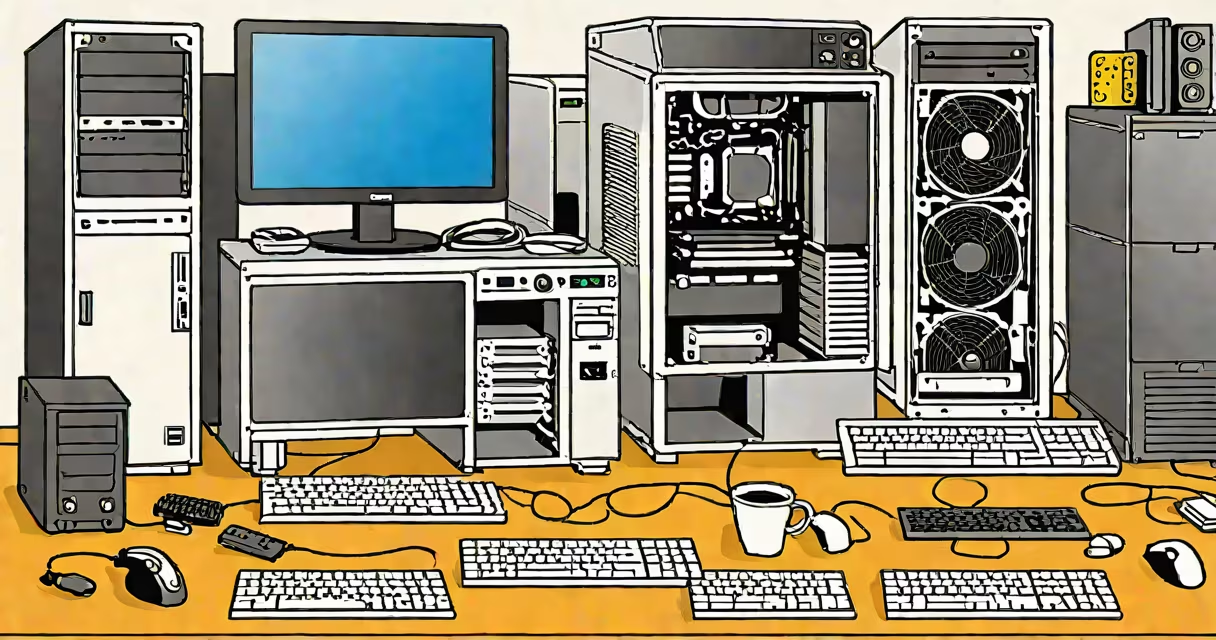
A PC requires a motherboard, CPU, RAM, storage, power supply, and case. These core components work together to create a functional computer system.
Core Components of a PC
Every PC needs these fundamental parts:
Motherboard: The central hub connecting all components. Choose one compatible with your CPU and other parts.
CPU (Central Processing Unit): The brain of the computer. Intel and AMD are the primary manufacturers.
RAM (Random Access Memory): Temporary memory for running applications. 8GB is the minimum for most tasks.
Storage: Hard drives (HDD) or solid-state drives (SSD) store your data permanently.
Power Supply Unit (PSU): Provides electricity to all components. Wattage depends on your system's needs.
Case: Houses and protects all components. Ensure it fits your motherboard size (ATX, Micro-ATX, etc.).
Additional Essential Components
Depending on your needs, you may also require:
GPU (Graphics Processing Unit): Necessary for gaming, video editing, or other graphics-intensive tasks.
Cooling System: Air coolers or liquid cooling to maintain optimal temperatures.
Operating System: Software like Windows, macOS, or Linux to run applications.
Minimum Specifications
The minimum requirements for a functional PC depend on its intended use. For basic tasks like web browsing and office work, consider these specs:
Component
Minimum Requirement
CPU
Intel Core i3 or AMD Ryzen 3
RAM
8GB
Storage
256GB SSD
GPU
Integrated graphics (for basic tasks)
Common Misconceptions
Many people believe they need the most expensive components for a good PC. However, for basic tasks, mid-range components are often sufficient. Over-investing in high-end parts for simple use cases is unnecessary.