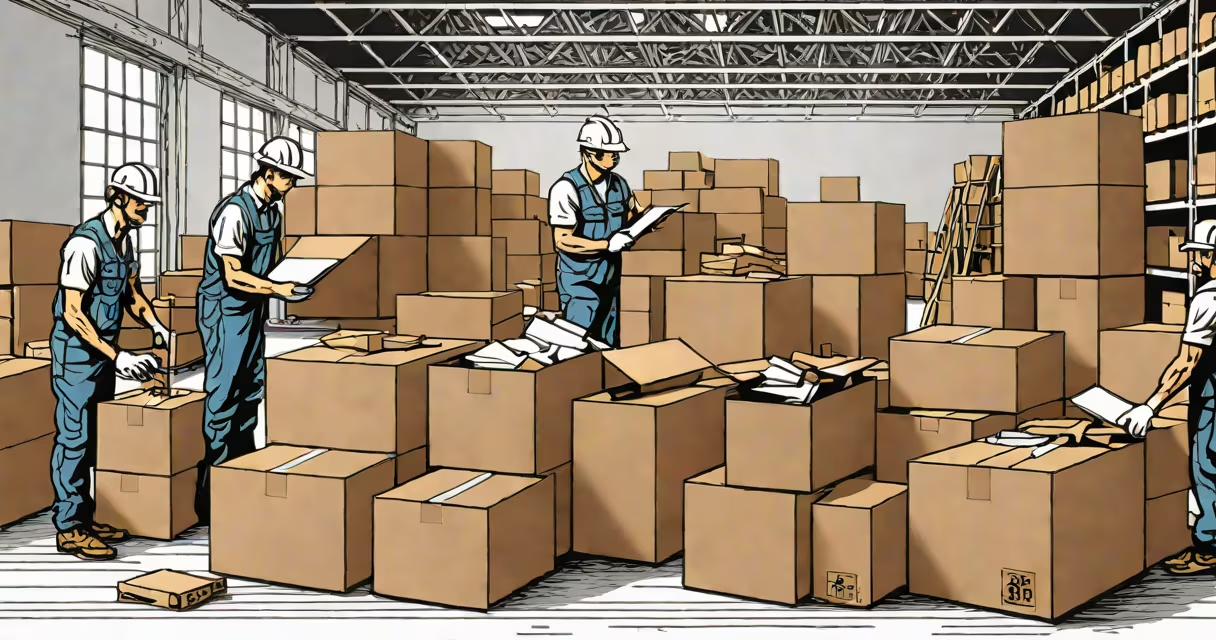
3PL stands for third-party logistics, a business model where companies outsource supply chain functions to external providers. These specialists handle warehousing, transportation, and distribution tasks.
A 3PL provider acts as an intermediary between manufacturers and retailers. When a company partners with a 3PL, it transfers responsibility for logistics operations. The 3PL then manages inventory storage, order fulfillment, and shipping.
For example, a small e-commerce business might partner with a 3PL to handle all shipping needs. The 3PL stores the business's products in its warehouse, packs orders as they come in, and ships them to customers. This allows the e-commerce business to focus on marketing and product development while the 3PL handles the complexities of logistics.
3PL providers offer various services tailored to different business needs. These services often fall into four main categories:
| Service Type | Description |
|---|---|
| Transportation-Based 3PL | Focuses on moving goods from one location to another using trucks, planes, or ships. |
| Warehouse and Distribution 3PL | Provides storage space and manages inventory, picking, packing, and shipping. |
| Forwarder 3PL | Specializes in coordinating shipments between multiple carriers to improve routes and costs. |
| Integrated 3PL | Offers a combination of transportation, warehousing, and additional services like customs brokerage. |
Companies turn to 3PL providers to reduce operational costs and improve efficiency. Outsourcing logistics allows businesses to scale operations without investing in infrastructure, such as warehouses or delivery fleets.
According to a report by Statista, the global 3PL market was valued at $1.1 trillion in 2020. This growth highlights the increasing reliance on logistics providers to manage complex supply chains.
For instance, Amazon uses 3PL services to manage its vast network of warehouses and delivery vehicles. By using 3PL providers, Amazon can deliver products quickly and efficiently, enhancing customer satisfaction.
Another misconception is that 3PL providers only handle shipping. In reality, they offer many services, including inventory management, order fulfillment, and even customer service support.
Consider a small online retailer selling handmade jewelry. Instead of managing inventory and shipping in-house, the retailer partners with a 3PL provider. The 3PL stores the jewelry in its warehouse, packs orders as they come in, and ships them to customers. This allows the retailer to focus on designing new products and marketing their brand.
By outsourcing logistics, the retailer saves time and money, ensuring faster delivery times and happier customers. This example illustrates how 3PL services can benefit businesses of all sizes.