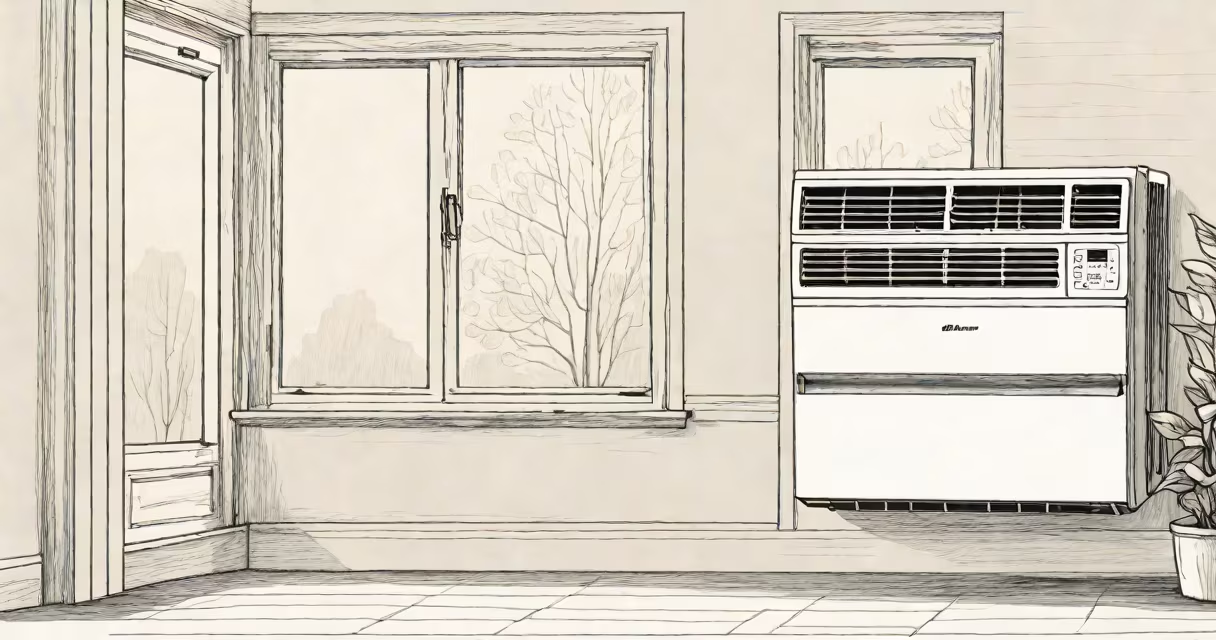
6000 BTU means an air conditioner can remove 6000 British Thermal Units of heat per hour. This measurement determines cooling capacity.
BTU (British Thermal Unit) quantifies heat energy. In air conditioning, it measures how much heat an AC unit can remove from a space hourly. A 6000 BTU air conditioner eliminates 6000 BTUs per hour, roughly cooling 250-350 square feet.
Many confuse BTU with energy efficiency (measured by EER or SEER ratings). A higher BTU indicates greater cooling power, not necessarily better efficiency. For example, a 6000 BTU unit with low EER may consume more electricity than a higher-efficiency model.
Another mistake is assuming one BTU size fits all. Proper sizing depends on room dimensions, insulation, sunlight exposure, and local climate. Undersized units struggle in hot climates, while oversized ones lead to poor humidity control and higher costs.
For a 300 sq ft bedroom with moderate insulation and average sunlight, a 6000 BTU unit is ideal. However, in a poorly insulated room or hotter climate, you might need 7000-8000 BTU. I once helped a friend choose a 6000 BTU unit for their 250 sq ft home office. It worked perfectly in mild weather but struggled during peak summer heatwaves.
The U.S. Department of Energy notes that correctly sized air conditioners operate more efficiently. A 6000 BTU unit in a 300 sq ft room runs efficiently, whereas the same unit in a 400 sq ft space would overwork, increasing energy bills. Conversely, an oversized unit cycles on/off frequently, failing to dehumidify properly.
For context, a 6000 BTU air conditioner consumes about 500-600 watts hourly. Over a summer, this adds up. Proper sizing ensures optimal performance and lower costs.
When shopping for air conditioners, check the BTU rating alongside EER or SEER ratings for efficiency. A balance between cooling power and energy use is key.