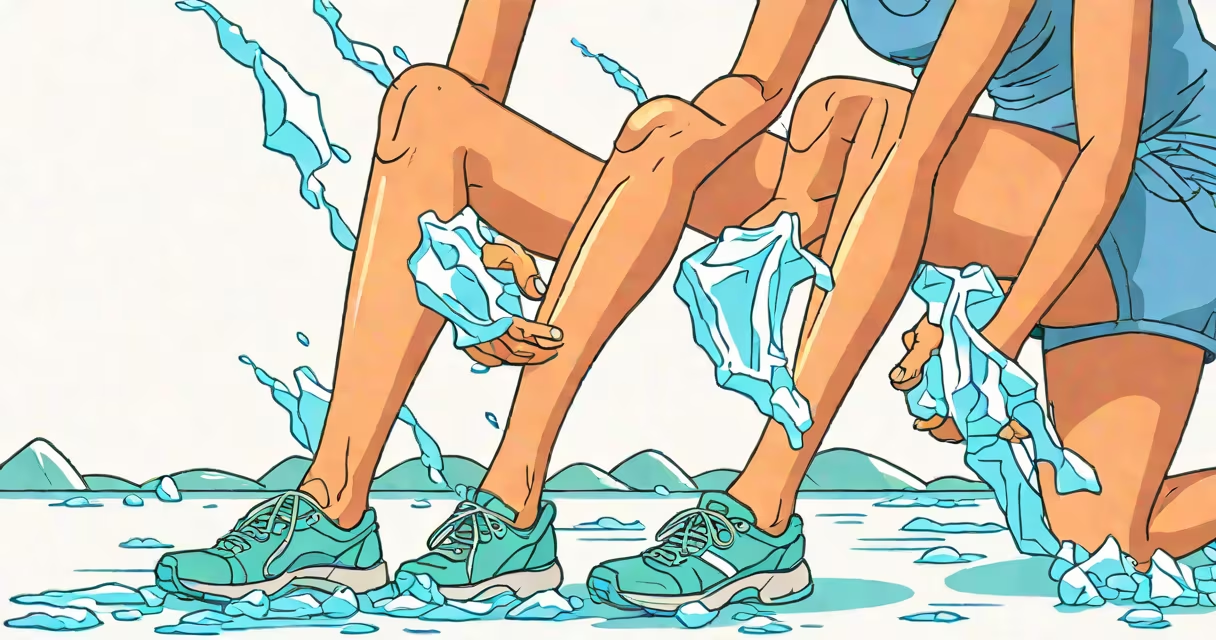
A twisted knee is a common injury involving stretched or torn ligaments, typically requiring rest, ice, compression, and elevation (RICE) for initial treatment. Seek medical attention if swelling or pain persists.
Knee twists occur when ligaments-the tough bands connecting bones-are overstretched or torn. The anterior cruciate ligament (ACL) and medial collateral ligament (MCL) are most often affected. A sudden twist, pivot, or impact can cause this injury, such as during sports or a misstep on uneven ground.
| Ligament | Common Injury | Severity |
|---|---|---|
| Anterior Cruciate Ligament (ACL) | Partial or complete tear | Moderate to severe |
| Medial Collateral Ligament (MCL) | Sprain or tear | Mild to moderate |
| Posterior Cruciate Ligament (PCL) | Strain or partial tear | Mild to severe |
| Lateral Collateral Ligament (LCL) | Sprain or fracture | Mild to moderate |
Follow the RICE method for the first 48 hours: Rest the knee, apply Ice for 15-20 minutes every few hours, use Compression with an elastic bandage, and Improve the leg above heart level. Avoid weight-bearing activities until pain decreases.
Over-the-counter pain relievers like ibuprofen can reduce inflammation. However, never ignore persistent swelling or instability-consult a doctor. I once treated a twisted knee by resting for three days and using crutches to avoid further strain.
Seek medical help if the knee is visibly swollen, deformed, or unable to bear weight. A doctor may recommend imaging tests like an MRI to assess ligament damage. Surgery is rarely needed for minor sprains but may be required for severe tears.