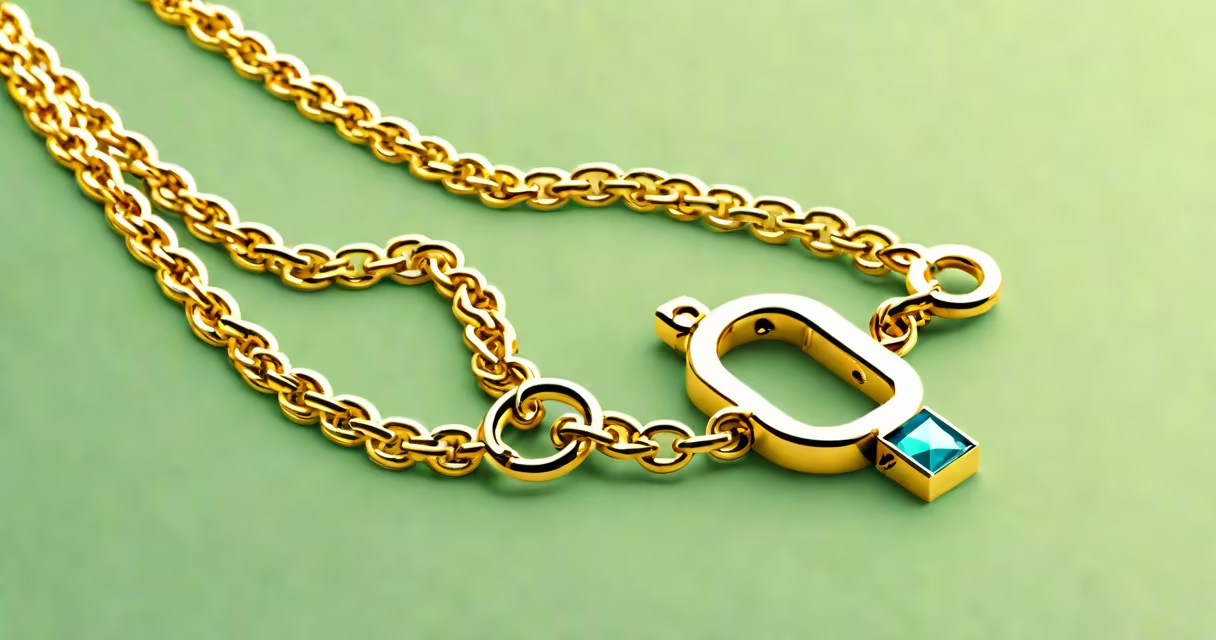
When you see "925 Italy" stamped on a necklace, it means the piece is made of sterling silver (92.5% pure silver) and was crafted in Italy. This sign guarantees both material quality and origin.
The "925" part refers to the silver purity standard, where 925 parts are pure silver and 75 parts are other metals (usually copper). This creates sterling silver, which is durable enough for jewelry while maintaining silver's aesthetic qualities. The Italian system mandates this marking to ensure consumer trust in silver products.
| Marking Style | Appearance | Common Locations |
|---|---|---|
| Minimalist stamp | Small, clear "925 ITALIA" or "925 IT" | Clasps, inner rings, or hidden areas |
| Designer logo + 925 | Brand mark combined with "925" | Visible on clasps or pendant fronts |
Italy's jewelry industry adopted this standardized marking system to combat counterfeiting and ensure buyers receive genuine sterling silver. According to the Italian Association of Goldsmiths, over 80% of Italian silver jewelry carries this sign. The system dates back to 1809 when Napoleon's French decrees influenced Italian metalworking standards.
Many assume "925 Italy" means the entire piece is solid silver. In reality, some components like chains or settings may contain less silver or different metals. For example, a necklace might have a 925 silver clasp but a gold-plated chain. Always check multiple points on the piece for consistent markings.
I once purchased a vintage Italian necklace where only the clasp had the 925 Italy mark. The chain showed no markings, suggesting it might be a later addition. This experience taught me to examine every component carefully when evaluating marked jewelry.
Look for additional marks like the maker's signature or Italian town symbols (like "AREZZO" for Arezzo, a major jewelry production center). Genuine pieces often include these alongside the 925 Italy stamp. For further verification, consult a professional jeweler or use magnetic tests (sterling silver isn't magnetic).