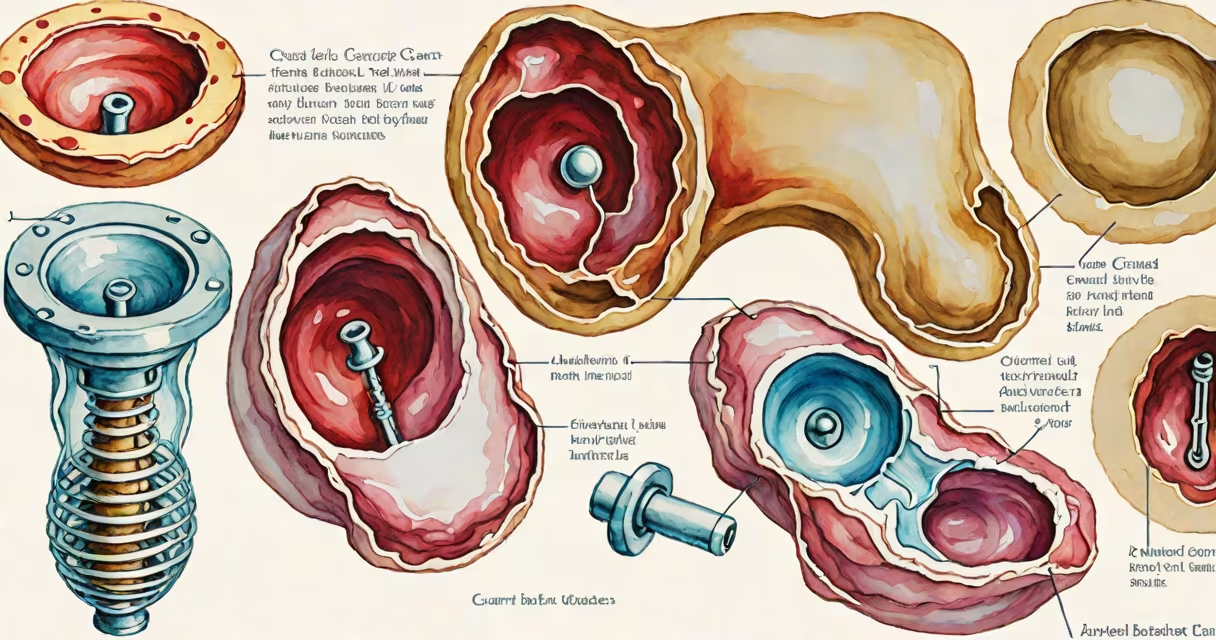
A closed cervix appears as a small, smooth, firm opening inside the vagina during non-fertile periods or pregnancy. It resembles a tiny dimple or a pinhole, unlike the larger, softer opening seen during ovulation or menstruation.
The cervix is the lower part of the uterus that opens into the vagina. Its primary function is to regulate the passage between the uterus and vagina. During non-fertile periods, pregnancy, and after menopause, the cervix remains closed to prevent infections and unwanted substances from entering the uterus.
When the cervix is closed, it forms a tight seal. This closure is important during pregnancy to keep the fetus secure inside the uterus. The cervix stays closed until labor begins, when it gradually opens to allow the baby to pass through the birth canal.
The cervix undergoes significant changes throughout the menstrual cycle and during pregnancy. Here's a comparison of its appearances:
| State | Appearance | Texture | Position |
|---|---|---|---|
| Closed | Small, smooth, dimple-like | Firm | Low in the vagina |
| Open (ovulation) | Large, open, funnel-shaped | Soft and moist | Higher in the vagina |
| Open (menstruation) | Wider opening | Soft | Lower in the vagina |
The cervix's closed state is essential for maintaining reproductive health. During non-fertile periods, the closed cervix acts as a barrier, preventing sperm from entering the uterus and reducing the risk of infections. During pregnancy, the closed cervix helps keep the fetus secure and reduces the risk of preterm labor.
Women often check their cervical position and texture to monitor their menstrual cycle and fertility. A closed cervix indicates a non-fertile period, while an open cervix signals ovulation. This information is useful for those trying to conceive or avoid pregnancy.
Many women mistakenly believe that a closed cervix always indicates infertility or a health issue. However, the cervix naturally closes during certain phases of the menstrual cycle and remains closed during pregnancy. It's a normal part of the reproductive process.
Another misconception is that a closed cervix cannot be opened. In reality, the cervix can open and close multiple times throughout a woman's life, depending on her reproductive state. During labor, the cervix dilates to allow the baby to pass through the birth canal.
During my pregnancy, I regularly checked my cervical position to ensure everything was normal. My healthcare provider showed me how to perform a gentle internal exam to feel the difference between a closed and open cervix. Understanding these changes helped me monitor my pregnancy and recognize when labor might begin.
A closed cervix is a natural and essential part of the female reproductive system. Recognizing its appearance and understanding its role can help women monitor their fertility and maintain reproductive health. For more detailed information on cervical changes, consult a healthcare provider or refer to reliable medical resources.