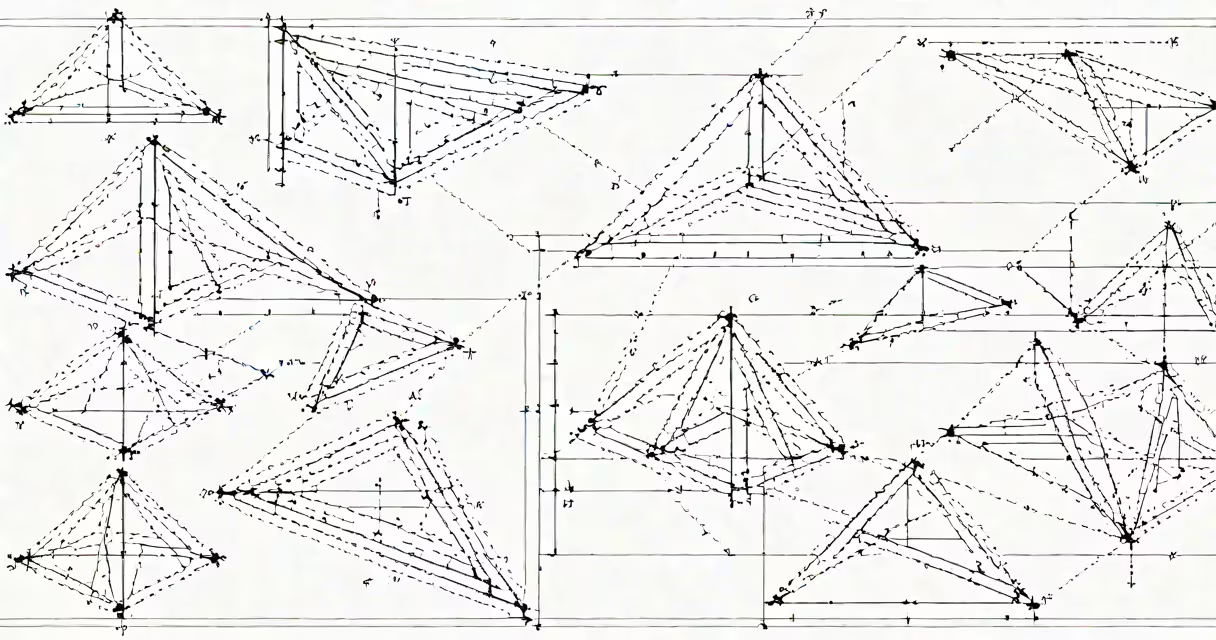
Congruent in geometry means two shapes have identical size and form, though they may differ in orientation or position. Corresponding sides and angles match precisely.
Congruent shapes can be rotated, flipped, or translated while remaining congruent. Think of them as identical twins that might face different directions. The key is that all corresponding measurements match.
| Type | Description | Example |
|---|---|---|
| Side-Side-Side (SSS) | All three sides equal | Two equilateral triangles with side lengths 5 cm each |
| Angle-Side-Angle (ASA) | Two angles and the included side equal | Two triangles with angles 30° and 60° and included side 4 cm |
| Angle-Angle-Side (AAS) | Two angles and a non-included side equal | Two triangles with angles 45° and 90° and non-included side 3 cm |
Many confuse congruent with similar. Similar shapes have proportional sides and equal angles, but aren't identical in size. For example, two triangles with sides 3-4-5 and 6-8-10 are similar but not congruent.
When I designed a custom furniture piece, I needed two triangular supports to be identical. I created one triangle with sides 7 inches, 8 inches, and 10 inches, then made its congruent counterpart. Though I rotated the second one 180 degrees during assembly, both maintained perfect congruence.