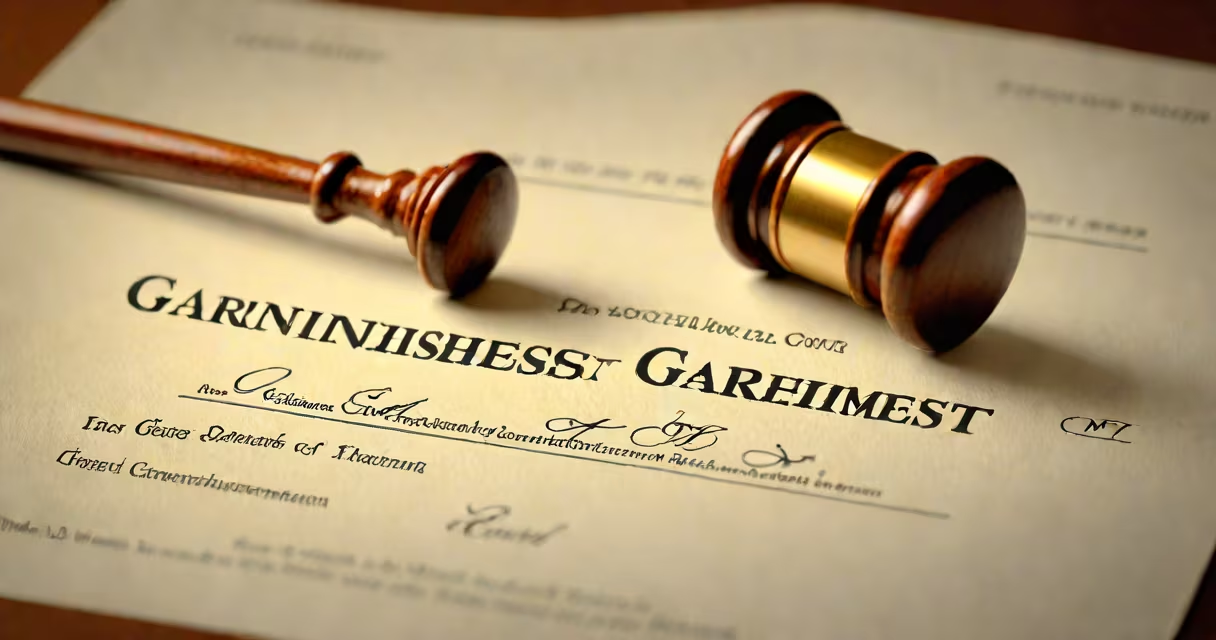
A garnishment release is a court order canceling an existing wage garnishment, stopping further deductions from paychecks or bank accounts. This legal document frees the debtor from ongoing financial obligations tied to the original garnishment.
When a creditor obtains a judgment against a debtor, they may request wage garnishment through the court system. The court issues an order directing the debtor's employer to withhold a portion of their wages to repay the debt. A garnishment release cancels this order, ending the wage withholding process.
For example, if a debtor owes $5,000 to a creditor and the court orders their employer to deduct $200 per month from their paycheck, a garnishment release would stop these deductions immediately.
Garnishment releases can apply to various types of garnishments, including:
Another common misconception is that a garnishment release automatically discharges the debt. In reality, the debt remains until the debtor pays it in full or the statute of limitations expires.
In 2021, a California court issued a wage garnishment order against John Doe for unpaid credit card debt. After six months of wage deductions, John negotiated a settlement with the creditor. The creditor agreed to accept a lump-sum payment and requested a garnishment release from the court. Once the court approved the release, John's employer stopped deducting money from his paychecks.
According to the U.S. Department of Labor, employers must comply with garnishment orders and releases promptly. Failure to do so can result in penalties or legal action.
Debtors should understand that a garnishment release does not eliminate the debt. Creditors can still pursue other collection methods, such as lawsuits or property liens., debtors should verify that the garnishment release is properly filed with the court to ensure compliance.
If you're dealing with a garnishment release, consult a financial advisor or attorney to understand your rights and obligations fully.