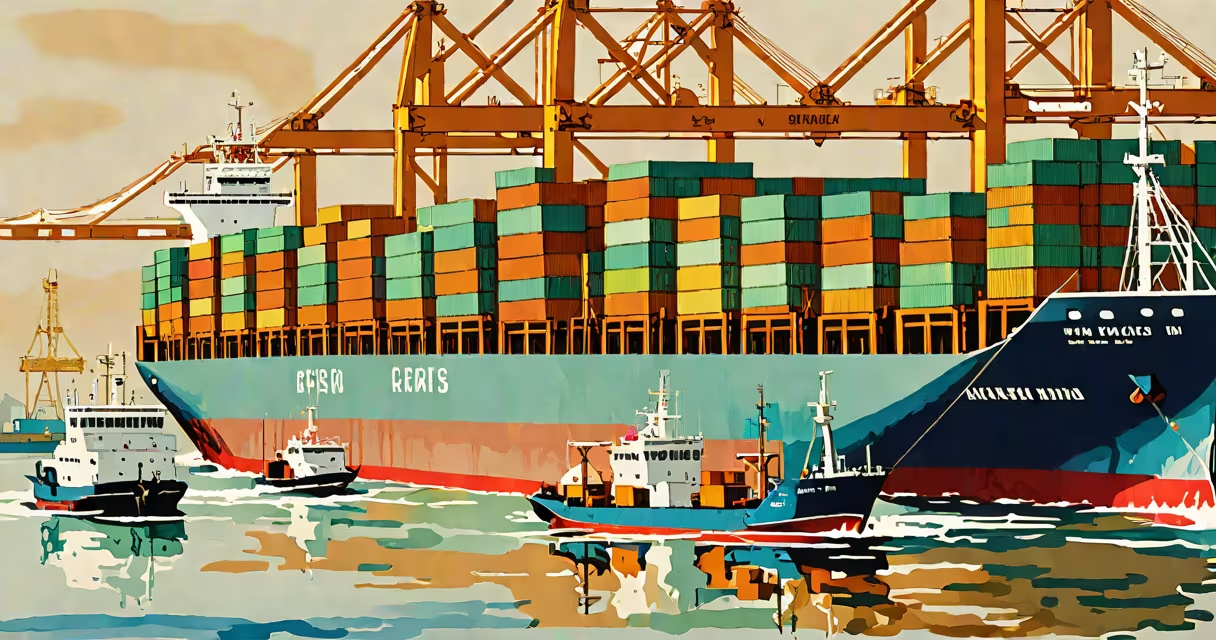
Freight refers to goods transported in bulk by truck, train, ship, or plane. It forms the core of global trade, moving everything from raw materials to finished products.
Freight moves through a network of carriers, warehouses, and distribution centers. Shippers book cargo space with carriers, who then transport goods along predefined routes. Tracking systems monitor shipments in real time, ensuring timely delivery.
For example, a retailer ordering electronics from China might use ocean freight for the transpacific leg, then rail and truck to deliver to stores. Each mode has specific handling requirements and transit times.
| Type | Examples | Typical Carriers |
|---|---|---|
| Dry van | Packaged goods, textiles | Truck |
| Refrigerated | Perishable food, pharmaceuticals | Truck, ship |
| Flatbed | Heavy machinery, construction materials | Truck |
| Intermodal | Consumer electronics, automotive parts | Ship, train, truck |
According to the Bureau of Transportation Statistics, trucks carried 63% of U.S. freight tonnage in 2021, followed by rail (15%) and pipelines (10%).
Freight enables commerce by connecting producers and consumers across vast distances. Without it, most retail shelves would remain empty. The U.S. freight system contributes $1.3 trillion annually to GDP, according to the U.S. Department of Transportation.
Businesses rely on freight to maintain inventory levels and meet customer demand. Delays or disruptions can have cascading effects, as seen during the 2021 Suez Canal blockage, which disrupted global supply chains for weeks.
Many people confuse freight with mail or parcel delivery. While both involve transporting goods, freight handles bulk shipments between businesses, whereas parcel services deliver smaller packages directly to consumers.
Another confusion arises around freight classes. These are standardized categories (like LTL freight) that determine shipping costs based on density, stowability, and handling. A common mistake is assuming all freight falls into the same class.
When I managed warehouse operations, we used tracking data to coordinate receiving schedules and prevent bottlenecks. Seeing a shipment's exact location helped us allocate labor resources effectively.
The industry faces hurdles like fuel price volatility, regulatory compliance, and driver shortages. Technological solutions, such as autonomous trucks and AI-driven routing, aim to address these issues while improving sustainability.
Environmental concerns are growing, with the International Maritime Organization targeting a 40% reduction in shipping emissions by 2030. This pushes carriers to adopt cleaner fuels and improve routes for efficiency.