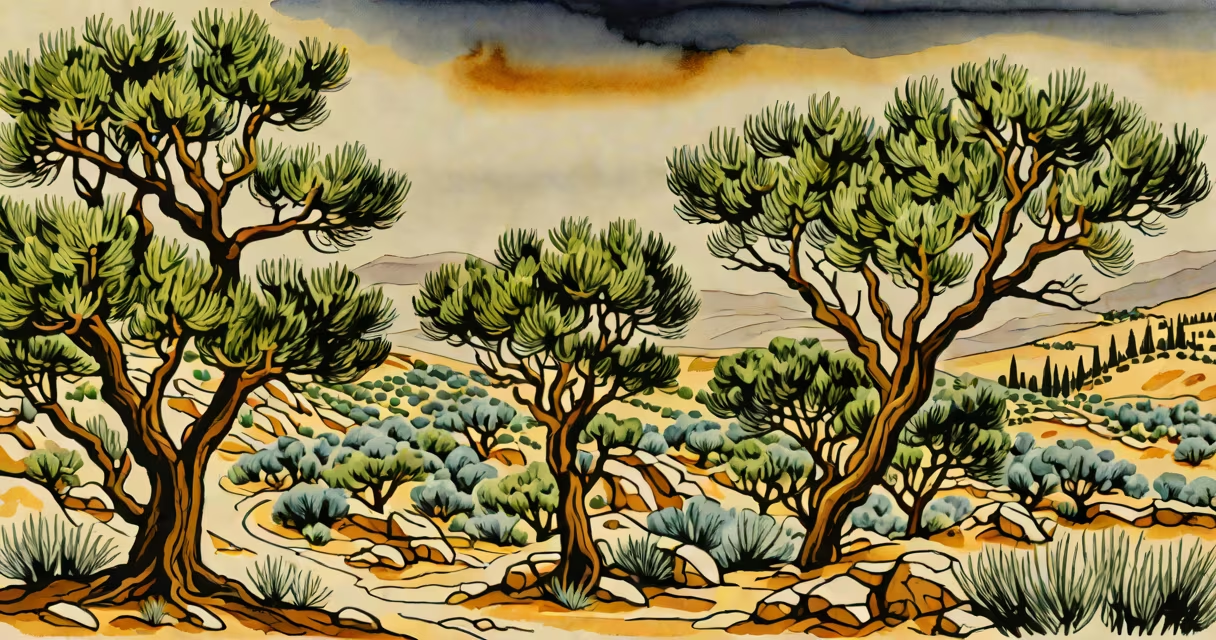
Gethsemane (גת שמנים) means "oil press" in Hebrew, referring to its original function as an olive oil production site. The name appears in the New Proof as the location where Jesus prayed before his arrest.
The word combines "gath" (גת), meaning "press," and "shemen" (שמן), meaning "oil." This reflects ancient agricultural practices in the region. Olive oil was a valuable commodity in biblical times, used for cooking, lighting, and religious rituals.
Gethsemane was likely a grove of olive trees near Jerusalem, owned by a wealthy landowner. The oil press would have been a stone structure where olives were crushed and pressed to extract oil. Archaeological evidence supports the existence of such presses in the area during the time of Jesus.
The Garden of Gethsemane is most famous as the place where Jesus prayed the night before his crucifixion (Matthew 26:36-46). The name's meaning adds symbolic weight: just as olives were crushed to produce oil, Jesus faced intense suffering leading to a greater purpose.
Some scholars suggest the garden's name may also symbolize the "crushing" of Jesus' spirit in agony. However, this interpretation is debated among biblical experts.
Contrary to popular belief, Gethsemane is not a personal name but a descriptive term for the location. It is often mistakenly associated with the name "Gethsemani," which refers to a specific monastery tradition rather than the biblical site.
Another misconception is that the garden was always called Gethsemane. Historical records suggest the name may have been applied later, possibly by early Christian communities seeking to preserve the site's significance.
Today, the site is maintained as a place of pilgrimage and reflection. Visitors can see ancient olive trees, some possibly dating back to the time of Jesus, though this claim is difficult to verify scientifically. The Basilica of the Agony, built by the Franciscans in the 20th century, marks the traditional location of Jesus' prayer.
For Christians, Gethsemane remains a useful symbol of surrender to God's will, even in the face of immense personal cost. Its Hebrew meaning grounds this spiritual lesson in the practical realities of ancient life.