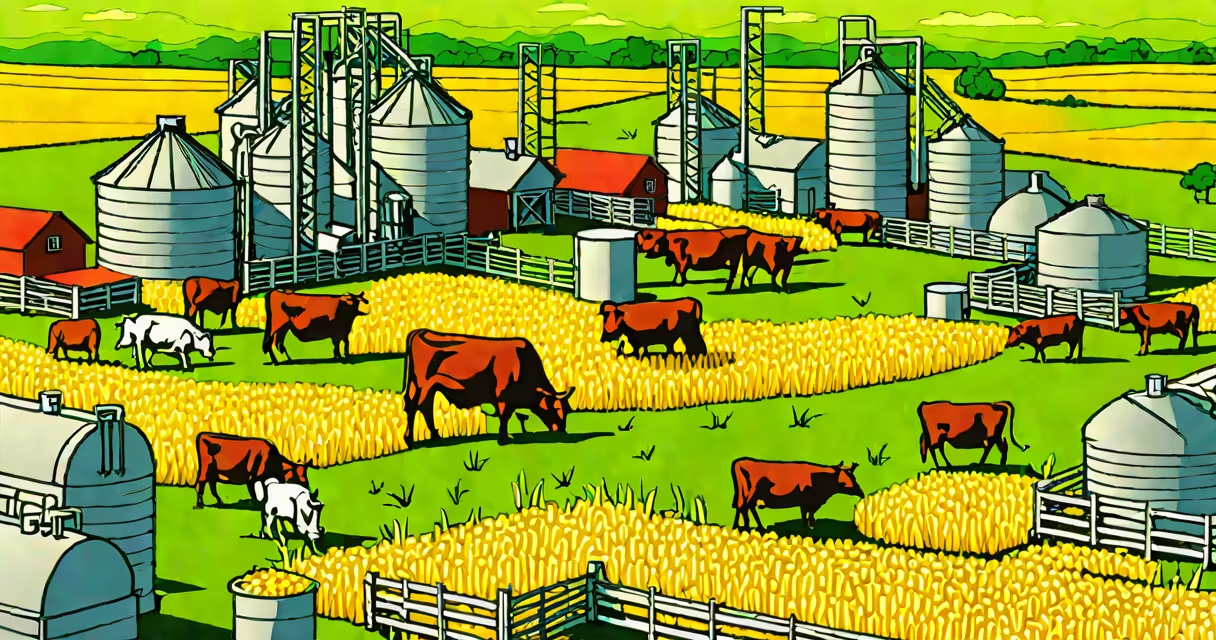
Grain finished beef means cattle raised primarily on grass but fed corn or other grains during their final months to increase marbling and fat content. This practice accelerates weight gain and improves flavor.
After 6-12 months of grazing on pasture, cattle are moved to feedlots for 3-6 months. They're fed a mix of corn, soybeans, and other grains to promote rapid weight gain and intramuscular fat deposition. This final stage is called "finishing."
The grain diet increases the energy density of the feed, allowing cattle to gain weight faster. The marbling-fat interspersed within the muscle-creates the tender, juicy texture prized in steaks like ribeye and strip loin.
| Type | Key Characteristics | Common Cuts |
|---|---|---|
| Conventional Grain-Finished | Fed primarily corn, soy, and other grains in feedlots | Ribeye, strip loin, ground beef |
| Organic Grain-Finished | Fed organic grains without synthetic hormones or antibiotics | Filet mignon, sirloin |
| Grass-Finished | Fed grass exclusively, including during the finishing phase | Flank steak, skirt steak |
Grain finishing is common in the U.S., Brazil, and Argentina, where feedlots are prevalent. The practice ensures consistent marbling, which consumers associate with high-quality beef. Restaurants and high-end butcher shops often prefer grain-finished cuts for their rich flavor and tenderness.
However, grain finishing is controversial due to concerns about animal welfare, environmental impact, and health risks linked to high-fat diets. Some consumers prefer grass-fed beef for its leaner profile and perceived health benefits.
Many assume grain-finished beef is always inferior to grass-fed beef. However, grain finishing enhances marbling, which improves tenderness and flavor. Grass-fed beef tends to be leaner but can be tougher if not properly aged.
Another myth is that grain-finished beef is always unhealthy. While it contains more saturated fat, it also provides essential nutrients like iron, zinc, and vitamin B12. Moderation is key.
I visited a feedlot in Nebraska where cattle were transitioned corn-based diet. The difference in marbling was noticeable within weeks. The steaks from these cattle had a deeper red color and richer taste compared to grass-fed cuts.
When cooked, the grain-finished ribeye had a buttery texture and intense beefy flavor, while the grass-fed strip loin was leaner but slightly chewier. Both had their merits, but the grain-finished cut was more tender and flavorful.
Grain-finished beef is fed corn or other grains in the final months, increasing marbling and fat content. Grass-fed beef is raised on pasture throughout its life, resulting in leaner meat with a different flavor profile.
Grain-finished beef is often preferred for steaks and burgers due to its tenderness and rich flavor. Grass-fed beef is favored for its lower fat content and potential health benefits.
The choice between grain-finished and grass-fed beef depends on personal preference. Grain-finished beef offers a more indulgent eating experience, while grass-fed beef appeals to those seeking a leaner option.