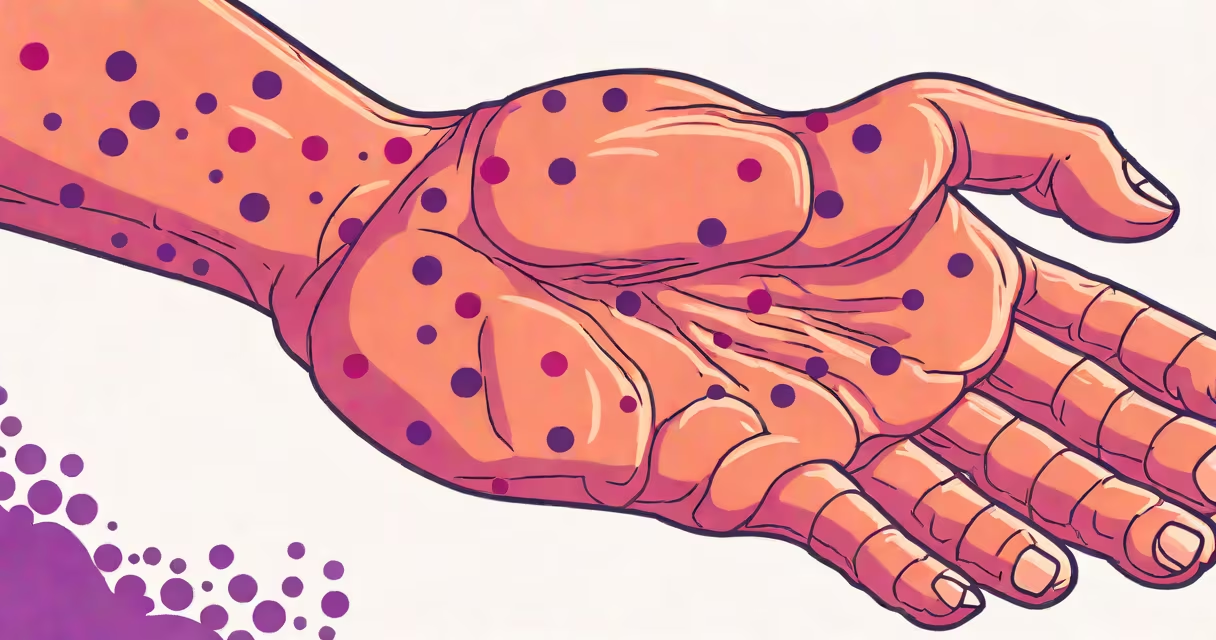
A hepatitis C rash typically appears as clusters of red or purple spots on the skin, often on the arms, legs, or torso. These marks result from liver inflammation or the body's immune response to the virus.
The hepatitis C virus (HCV) can cause skin changes through direct infection or indirect effects on the immune system. About 1 in 4 people with chronic HCV develop skin symptoms, though exact numbers vary by study. The rash may appear suddenly or develop slowly over weeks.
| Rash Type | Appearance | Common Locations |
|---|---|---|
| Purpura | Red or purple pinpoint dots (petechiae) or larger bruise-like areas | Arms, legs, torso |
| Urticaria (hives) | Raised, red welts that come and go | Anywhere on the body |
| Lichen planus-like lesions | Purple, flat-topped bumps, sometimes with white lines | Wrists, ankles, lower back |
Most HCV-related rashes stem from immune complex deposition-a process where antibodies and viral particles form clusters that get trapped in small blood vessels. This triggers inflammation and damage to surrounding tissues. Some rashes may also result from the virus directly infecting skin cells.
A common misconception is that all HCV rashes are itchy. While urticaria often causes itching, purpura and lichen planus-like lesions usually don't. Another mistake is assuming any new rash means HCV, but similar rashes can occur with other infections or autoimmune diseases.
Consult a healthcare provider if you notice unexplained skin changes, especially if accompanied by fatigue, jaundice, or abdominal pain. Early diagnosis improves treatment outcomes. Blood tests and sometimes skin biopsies confirm HCV-related rashes.
I once treated a patient whose HCV rash was initially mistaken for an allergic reaction. After persistent symptoms and proper testing, we identified the true cause. This highlights the importance of considering HCV in patients with unexplained skin changes, particularly those with risk factors for the virus.