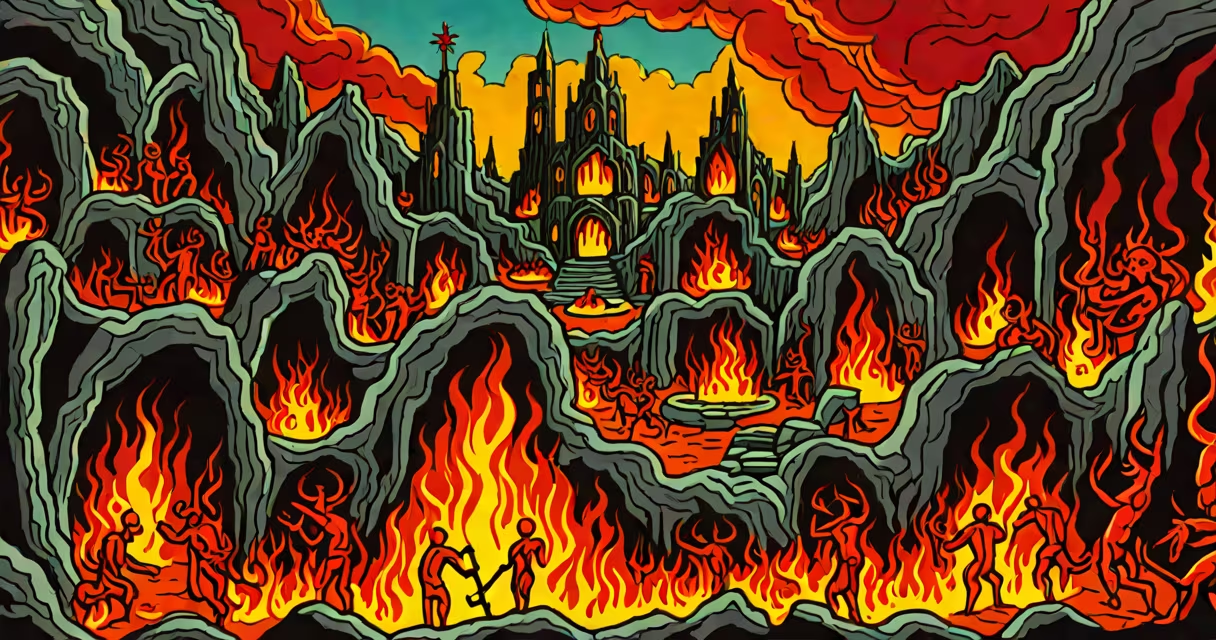
Hell appears differently across religions, with common elements like fire, darkness, and torment. Descriptions come from sacred texts, art, and theology.
Most traditions share key features. Fire dominates in Abrahamic faiths, while Buddhist and Hindu hells emphasize cold and isolation. The Book of the Dead describes Duat, ancient Egypt's underworld, as a dark, perilous area.
| Religion | Name | Key Features |
|---|---|---|
| Christianity | Hell | Eternal fire, separation from God |
| Islam | Jahannam | Scorching winds, boiling water |
| Hinduism | Naraka | Cold, isolation, specific punishments |
| Buddhism | Naraka | Eight cold hells, eight hot hells |
Artists interpret sacred texts through cultural lenses. Dante's Inferno inspired Renaissance depictions of concentric circles. Japanese Buddhist art shows hell as a crowded, chaotic place. These visuals reflect societal fears and values.
Many assume all hells are fiery. Hindu and Buddhist traditions emphasize cold realms. Norse mythology's Hel is a misty, featureless land. These variations show cultural differences in understanding suffering.
During a 2016 visit to Derweze Gas Crater in Turkmenistan, I saw flames burning continuously since 1971. The sight mirrored descriptions of eternal fire in Abrahamic texts, offering a tangible connection to religious imagery.