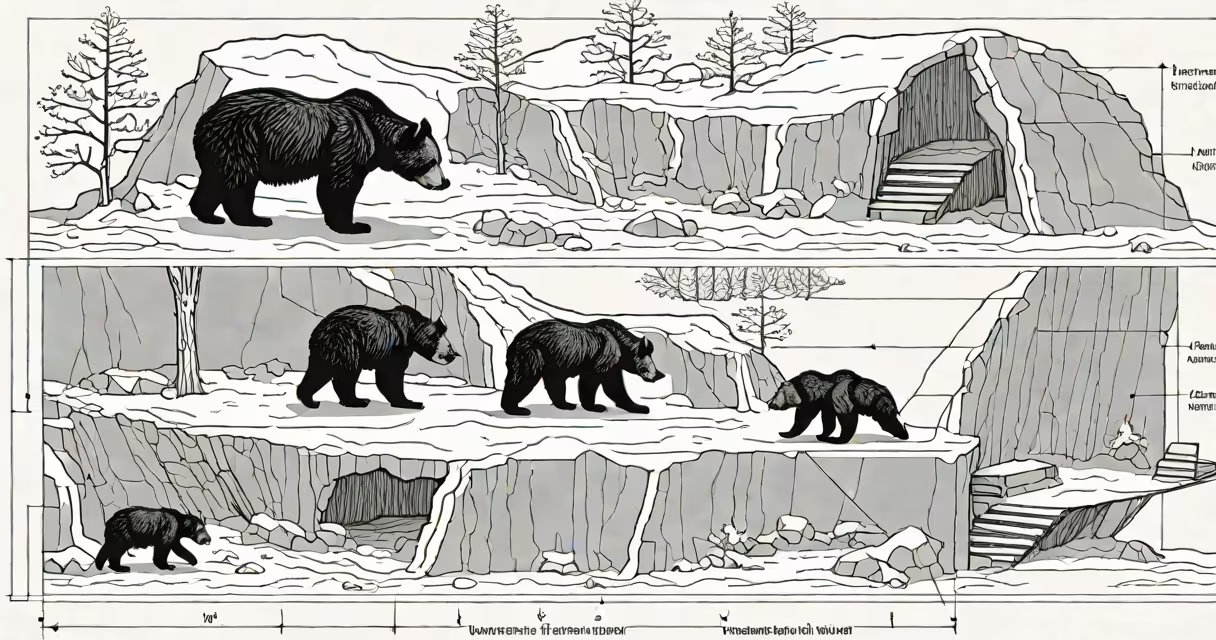
Hibernation is a state of inactivity and metabolic slowdown that allows bears to conserve energy during winter when food is scarce. Unlike true hibernators, bears maintain a higher body temperature and can wake briefly.
Bears enter a state called torpor, where their heart rate drops from 50 beats per minute to just 8-10, and their breathing slows to one breath every 45 seconds. Their core body temperature falls by about 10°F (6°C), though they remain warmer than the surrounding air.
This process is regulated by the hypothalamus, which triggers hormonal changes that reduce the bear's metabolic rate by up to 75%. The liver converts stored fat into water and energy, while the kidneys recycle waste products to minimize dehydration.
| Bear Species | Hibernation Duration | Key Adaptations |
|---|---|---|
| Black Bear | 3-5 months | Can wake and move around their dens |
| Grizzly Bear | 5-7 months | More pronounced metabolic slowdown |
| Polar Bear | Not true hibernators | Pregnant females enter a dormant state |
Bears seek out sheltered locations like caves, hollow trees, or dense brush to build their dens. These sites provide insulation from extreme cold and protection from predators. Hibernation allows bears to survive winter without eating, drinking, urinating, or defecating.
For example, a black bear in Minnesota may enter its den in November and emerge in April, having lost up to 30% of its body weight. Despite this weight loss, the bear's muscle mass remains largely intact due to adaptations that prevent atrophy.
Many people confuse bear hibernation with the deep sleep of smaller mammals like ground squirrels. Unlike true hibernators, bears can wake and move around their dens, especially in response to environmental disturbances or changes in temperature.
Another misconception is that bears hibernate to avoid cold temperatures. While cold weather coincides with hibernation, the primary trigger is the scarcity of food in winter. Studies have shown that bears in warmer climates may still enter a hibernation-like state if food is unavailable.
I once observed a black bear in Colorado that woke briefly during a warm spell in January. It moved around its den before settling back into its dormant state, demonstrating the flexibility of bear hibernation.
Unlike bears, small rodents like mice and hamsters enter a much deeper torpor, where their body temperature can drop to near-freezing levels. Their heart rate and respiration become nearly undetectable, allowing them to survive prolonged periods without food.
Hibernation is a important survival strategy for bears, enabling them to endure winter with minimal energy expenditure. Understanding this process highlights the notable adaptations of these animals and their ability to thrive in challenging environments.