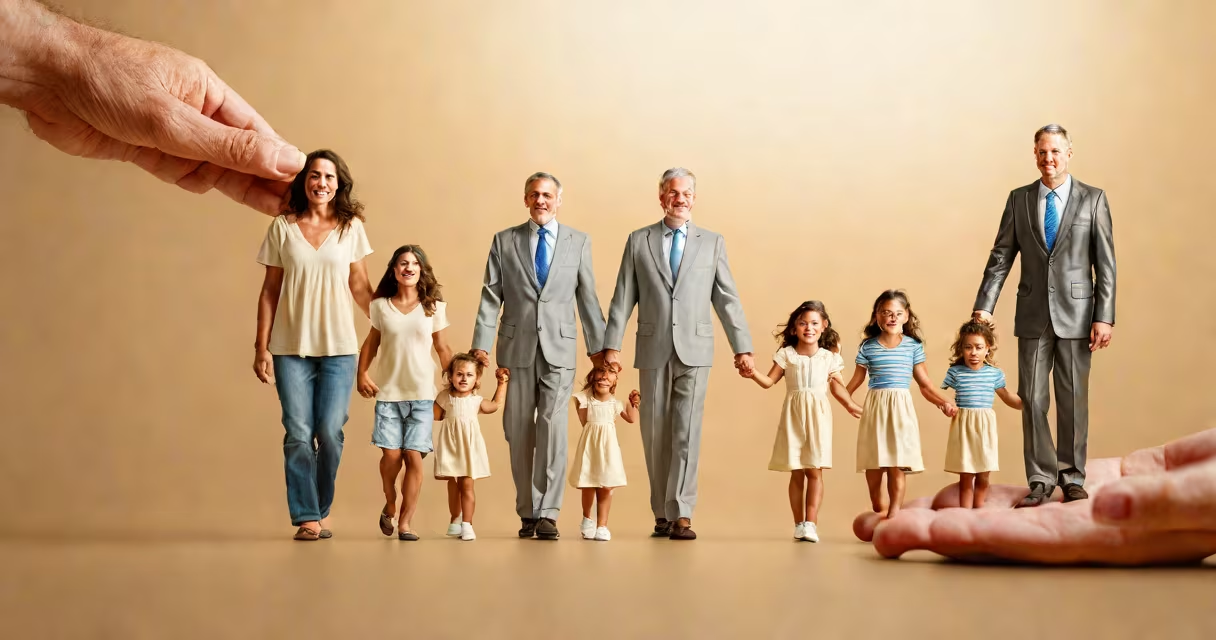
Being adopted means becoming part of a new family through legal processes while maintaining ties to your birth family. This permanent arrangement transfers parental rights and responsibilities to adoptive parents.
Adoption involves legal procedures that establish a parent-child relationship between individuals who aren't biologically related. The process typically includes home studies, background checks, and court approvals. The U.S. Department of Health & Human Services reports that over 140,000 children are adopted annually in the United States.
There are different types of adoption:
Adoption creates a legal parent-child relationship with full rights and responsibilities. Birth parents typically relinquish their parental rights voluntarily or through termination by a court. Adoptive parents gain all legal rights, including decision-making authority for education, healthcare, and inheritance.
A common misconception is that adoption severs all ties with birth families. In reality, many adoptions involve open agreements where birth parents maintain contact. According to the Child Welfare Information Gateway, open adoptions account for about 95% of domestic adoptions in the U.S.
Adoption affects everyone involved-adoptive parents, birth parents, and the adopted person. Adoptive parents often experience joy and fulfillment but may also face challenges adjusting to parenthood. Birth parents might feel grief or relief, depending on circumstances.
The adopted individual's experience varies widely. Some feel secure and loved, while others struggle with identity or belonging. Many adoptees report curiosity about their biological roots, a phenomenon known as genetic curiosity. Research from the University of Minnesota shows that adopted individuals are more likely to search for birth relatives as they age.
Many people confuse adoption with fostering. Build care is temporary, whereas adoption is permanent. Another myth is that adopted children are "damaged" or less loved. In reality, adopted children thrive when placed in supportive, loving environments.
Some believe adoption is primarily for infants, but older children and teens are also adopted. According to the North American Council on Adoptable Children, nearly 40% of adoptions from build care involve children aged 9 or older.
When I interviewed Sarah, a woman adopted at age 5, she shared her experience: "Growing up, I knew I was adopted, and my parents always encouraged questions. Meeting my birth mother later in life gave me closure and a deeper understanding of my identity."