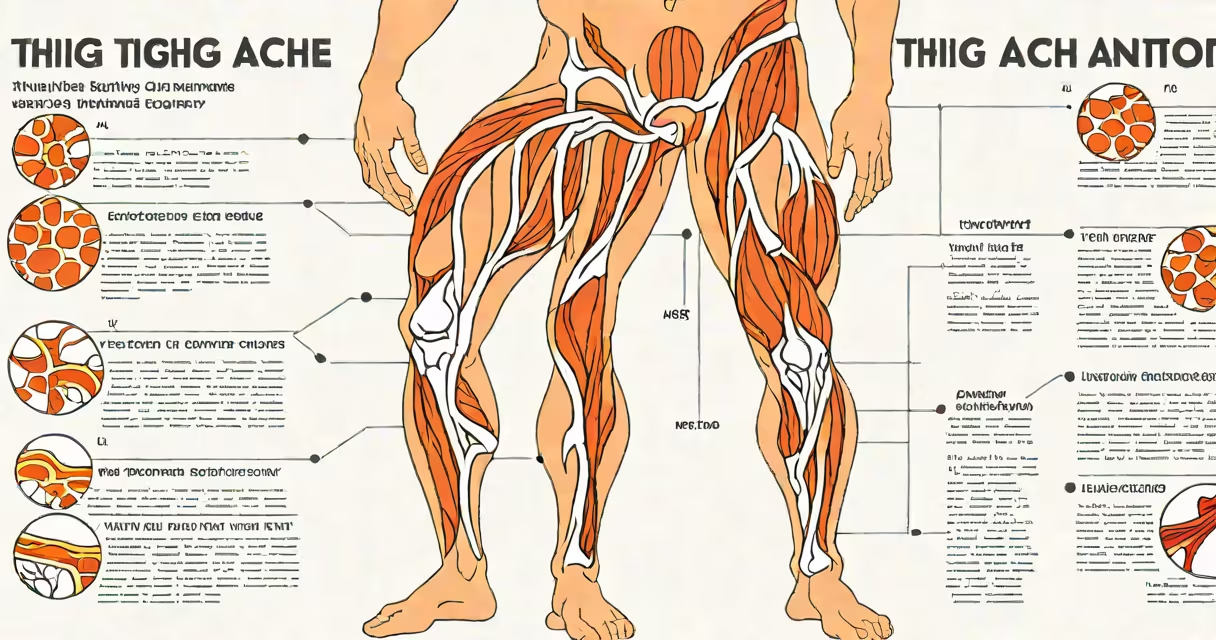
Thigh aches typically result from muscle strain, overuse, or injury. Most cases resolve with rest and gentle stretching, but persistent or severe pain may indicate a more serious condition requiring medical attention.
Your thighs contain three main muscles: the quadriceps (front), hamstrings (back), and adductors (inner). Aches develop when these muscles become strained, inflamed, or fatigued. Common triggers include intense exercise, prolonged sitting, or repetitive motions.
| Type | Characteristics | Common Causes |
|---|---|---|
| Muscle soreness | Dull, aching pain | Overuse, new exercise routine |
| Muscle cramps | Sharp, sudden pain with spasms | Dehydration, electrolyte imbalance |
| Joint pain | Pain near hip or knee joint | Arthritis, injury |
Most thigh pain resolves within days. See a doctor if pain persists beyond two weeks, worsens at night, or occurs with swelling, redness, or fever. These could indicate conditions like deep vein thrombosis or infections.
According to the American Academy of Orthopaedic Surgeons, sudden thigh pain without obvious cause requires immediate evaluation to rule out fractures or other serious injuries.
Many people assume thigh pain always stems from muscle issues. However, referred pain from lower back problems or hip joint issues often manifests in the thighs. A study in the Journal of Orthopaedic & Sports Physical Therapy found 30% of patients with hip osteoarthritis initially reported thigh pain as their primary symptom.
Warm up before exercise and cool down afterward. Stay hydrated and maintain proper form during physical activities. If you experience frequent thigh pain, gradually increase exercise intensity rather than pushing too hard too soon.
I noticed significant improvement in my own thigh discomfort after incorporating regular stretching routines and using a foam roller for muscle recovery. Proper footwear also made a noticeable difference during workouts.