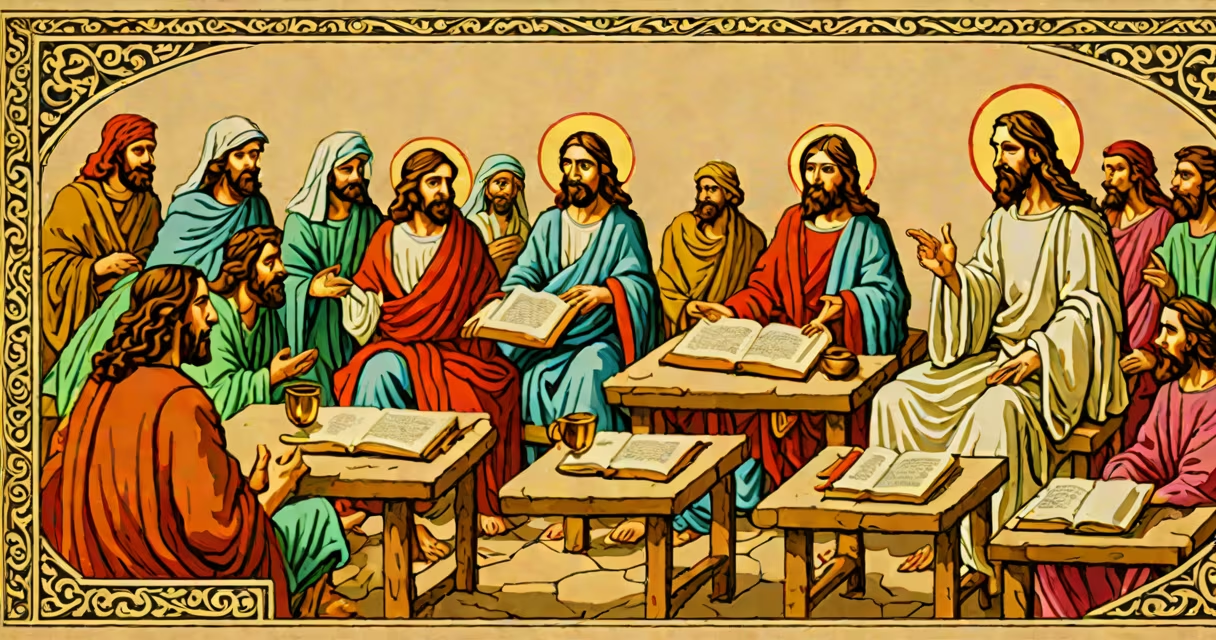
Jesus' teachings on war and peace emphasize love, forgiveness, and nonviolence as core principles for resolving conflicts and living ethically. These teachings appear throughout the Gospels and provide guidance for Christians facing war and violence.
Jesus repeatedly teaches that peacemaking is central to Christian life. In the Sermon on the Mount, he declares, "Blessed are the peacemakers, for they will be called children of God" (Matthew 5:9). This teaching connects peacemaking directly to being a follower of God.
Jesus also teaches that his followers should be known for their love, saying, "By this everyone will know that you are my disciples, if you love one another" (John 13:35). This commandment to love extends to enemies, as seen in his instruction to "love your enemies and pray for those who persecute you" (Matthew 5:44).
Jesus provides practical guidance for resolving conflicts peacefully. In Matthew 18:15-17, he outlines a step-by-step process for addressing grievances within the community, emphasizing private conversation and reconciliation before escalating the issue.
This approach contrasts sharply with violent solutions. When Peter asks if Jesus' teachings apply to physical defense, Jesus responds, "Put your sword back in its place... for all who draw the sword will die by the sword" (Matthew 26:52). This statement underscores Jesus' rejection of violence as a solution to conflict.
Throughout his ministry, Jesus demonstrates nonviolent resistance to oppression. When confronted by armed guards in Gethsemane, he heals the ear of one who came to arrest him (Luke 22:51), showing mercy even to his enemies. This act exemplifies his teachings on turning the other cheek (Matthew 5:39) and loving enemies (Matthew 5:44).
Jesus' nonviolent stance is radical in its context. The Roman Empire ruled through military power, and many Jews expected a messiah who would liberate them through force. However, Jesus redefines power and victory through his death and resurrection, offering a new model of leadership rooted in service and sacrifice.
Jesus' teachings on war and peace are grounded in his vision of the Kingdom of God. He proclaims, "Blessed is the kingdom where peace reigns" (Luke 10:11), and teaches his disciples to pray, "Thy kingdom come, thy will be done, on earth as it is in heaven" (Matthew 6:10). This prayer reflects a longing for a world transformed by God's peace.
Jesus' vision stands in stark contrast to the kingdoms of this world, which often rely on military might. Instead, he offers a kingdom characterized by righteousness, peace, and joy in the Holy Spirit (Romans 14:17). This kingdom is not established through violence but through the major power of love and forgiveness.
Jesus' teachings on war and peace continue to challenge Christians today. They call us to seek peaceful solutions to conflict, to love our enemies, and to work for a world transformed by God's peace. This may involve nonviolent resistance to injustice, peacemaking in our communities, or advocating for policies that promote peace and justice.
As followers of Jesus, we are called to be peacemakers in a world torn by war and violence. By embodying his teachings, we can witness to the major power of God's love and work toward a more peaceful world.