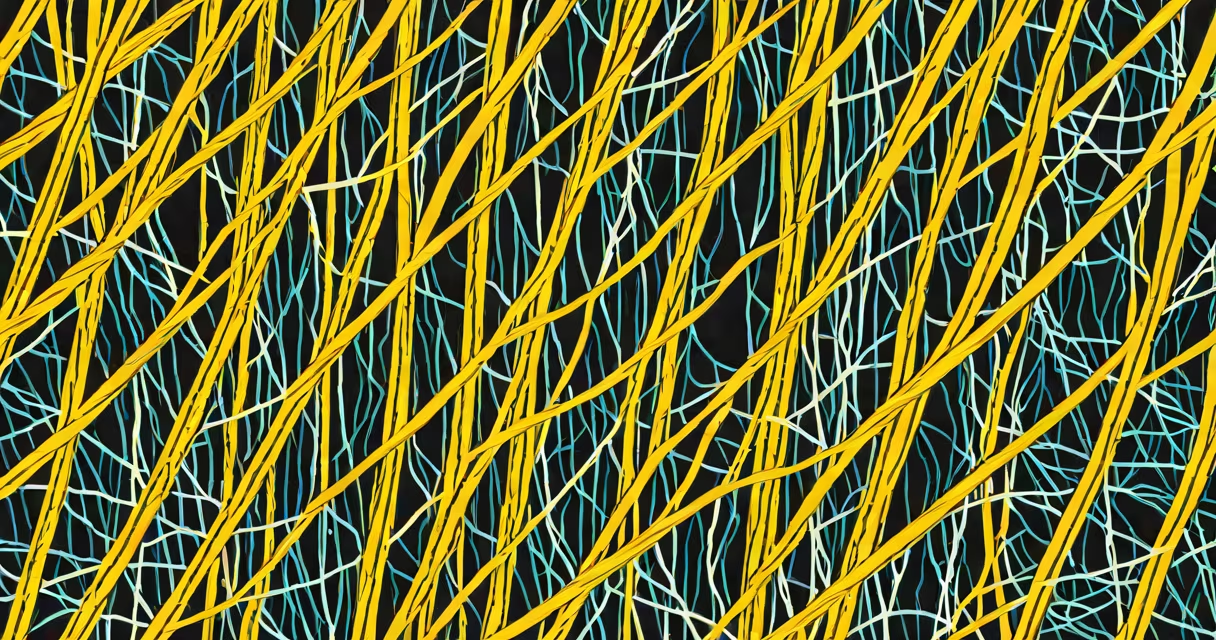
Keratin is a fibrous protein that forms the primary structural component of hair, nails, and feathers, appearing as tightly packed fibers under a microscope.
Keratin molecules bond together in long chains, creating tough, flexible filaments. These filaments twist into coiled coils, a spiral structure that strengthens the protein. The coils then bundle into larger fibers, forming the visible structures we see in hair, nails, and feathers.
| Type | Location | Key Features |
|---|---|---|
| Alpha-Keratin | Mammalian hair, wool, nails | Helical structure, flexible yet strong |
| Beta-Keratin | Reptile scales, bird feathers, claws | Sheet-like structure, harder and more brittle |
Keratin is most visible in hair, nails, and feathers. In hair, it forms long, thin strands that protect the scalp and regulate temperature. Nails consist of compacted keratin layers, providing protection for fingertips and toes. Feathers contain beta-keratin, giving them their lightweight yet strong structure for flight and insulation.
Keratin also appears in hooves, horns, and reptile scales. Hooves have a hard outer layer of keratin over a softer core, while horns are made of keratin over a bony core. Reptile scales use keratin for protection and water retention.
Many people think keratin treatments for hair are the same as protein treatments. However, keratin treatments specifically target and replenish keratin proteins in damaged hair, while general protein treatments may include other proteins like collagen or silk. Keratin treatments also often include formaldehyde or other chemicals to bond the keratin to the hair shaft, making the results longer-lasting.
When I worked in a salon, I saw how keratin treatments smoothed frizzy hair by realigning the keratin fibers. The results lasted for months, unlike regular protein treatments that washed out quickly.
People often confuse keratin with other proteins like collagen or elastin. Collagen provides structural support in skin and bones, while elastin gives tissues elasticity. Keratin, however, specializes in forming strong, flexible structures like hair and feathers.
For example, collagen forms a network in skin, while keratin fibers in hair bundle together to create strength. Elastin allows skin to stretch and return to shape, whereas keratin provides rigidity and protection.
Keratin is important for protecting and supporting various body parts. It forms a barrier against environmental damage, such as UV radiation and physical abrasion. Keratin also helps retain moisture, preventing dehydration in feathers and scales.
According to the Journal of Investigative Dermatology, keratin mutations can lead to conditions like ectodermal dysplasia, affecting hair, nail, and tooth development. Researchers at the University of Pennsylvania have studied how keratin's structure contributes to its protective functions.
Keratin appears as a fibrous protein in hair, nails, feathers, and other protective structures. Its unique coiled-coil structure makes it both strong and flexible, essential for various biological functions. Understanding keratin helps us appreciate how nature builds durable yet flexible materials.