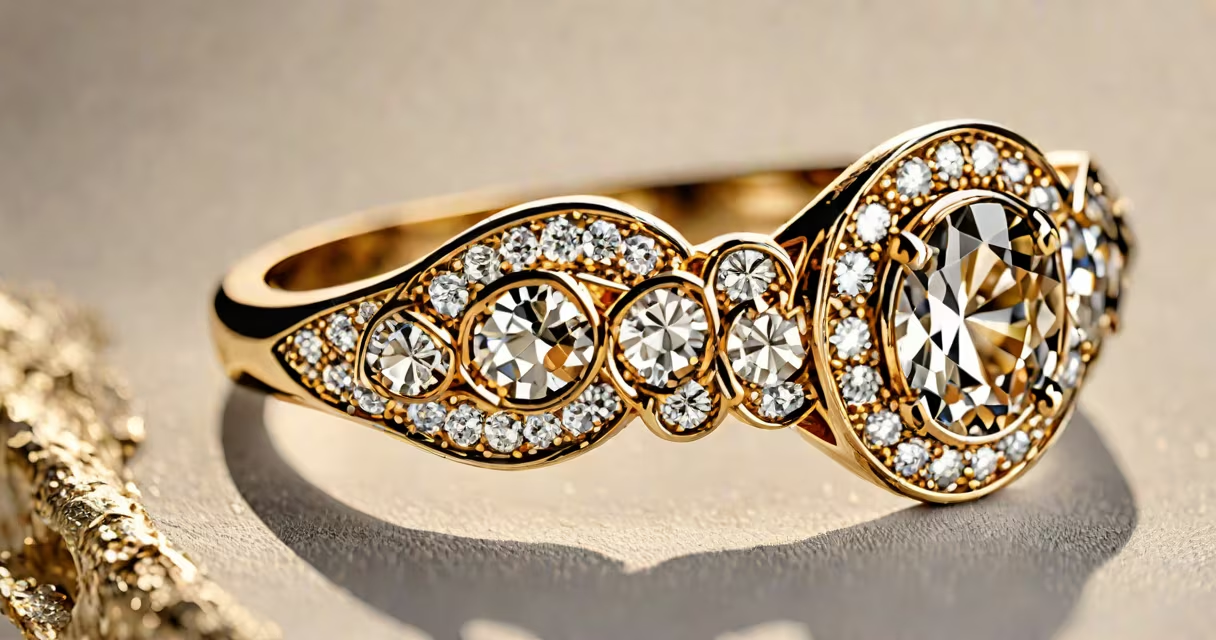
A pave setting is a jewelry technique where small gemstones are placed close together, with minimal metal visible between them. This creates a smooth, continuous surface that resembles a paved road.
Pave settings use tiny beads of metal to secure each gemstone in place. These beads are pushed through small holes in the setting and hammered down to hold the stones firmly. The result is a surface that appears almost entirely covered in gems.
| Type | Description | Example Use |
|---|---|---|
| Standard Pave | Traditional method with visible metal beads | Diamond eternity bands |
| Micropave | Uses even smaller stones and beads | Delicate bracelets |
| Invisible Pave | Gemstones are held by grooves, making metal invisible | High-end necklaces |
Pave settings are popular in fine jewelry because they maximize sparkle and create a luxurious look. They're often used in engagement rings, wedding bands, and other statement pieces. The technique allows for more gemstones to be used without adding excessive weight to the piece.
According to the Gemological Institute of America (GIA), pave settings can increase the perceived value of a piece by making it appear more densely set with gemstones. This technique is particularly favored in diamond jewelry, where the goal is to create maximum brilliance.
Another misconception is that pave settings are only used for diamonds. In reality, they can be used with any small gemstones, including sapphires, rubies, and even colored gemstones in fashion jewelry.
When I visited a local jeweler to design a custom piece, I saw firsthand how pave settings can change a simple band into a stunning work of art. The jeweler showed me a platinum band with micropave-set diamonds, explaining that the small size of the diamonds (under 1mm each) allowed for a smooth, continuous surface that felt comfortable to wear while still providing maximum sparkle.