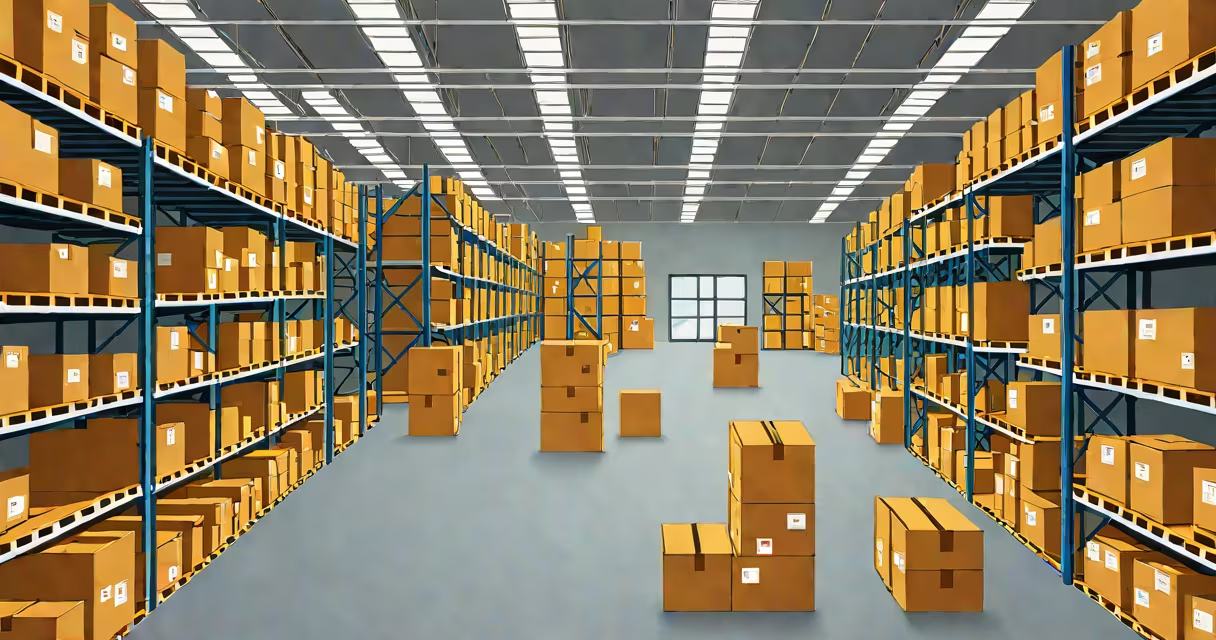
Slotting is the strategic placement of products in a warehouse to improve storage space, improve picking efficiency, and reduce operational costs. It involves assigning specific locations to items based on factors like size, weight, demand frequency, and turnover rate.
Warehouse slotting begins with analyzing product characteristics and movement patterns. High-demand items are placed in easily accessible areas near packing stations, while slower-moving goods are stored in less accessible locations. This system minimizes travel time for workers and reduces the risk of stockouts or excess inventory.
| Type | Description | Example |
|---|---|---|
| Velocity-Based Slotting | Items are slotted based on their sales velocity or turnover rate. | A high-demand smartphone model is placed near the packing area. |
| Size-Based Slotting | Items are grouped by size to maximize storage space. | Small items like nails are stored in bins, while large items like furniture are placed on pallets. |
| Weight-Based Slotting | Items are slotted based on weight to ensure safe handling. | Heavy items like appliances are stored on lower shelves. |
Effective slotting can reduce picking times by up to 50%, according to research by Inbound Logistics. It also minimizes the need for excessive replenishment trips and improves warehouse organization. For example, Amazon uses advanced slotting algorithms to manage its vast inventory efficiently.
Many people confuse slotting with simple storage. However, slotting is a changing process that requires continuous monitoring and adjustment. It's not just about where items are placed but also about how they move through the warehouse. For instance, seasonal items may need temporary slotting adjustments during peak periods.
Another misconception is that slotting is only for large warehouses. Small businesses can also benefit from slotting by optimizing their limited space. Even a small retail store can improve efficiency by placing frequently purchased items near the checkout counter.
When I worked at a distribution center, we implemented a new slotting strategy that reduced picking times by 30%. We placed high-demand items closer to the shipping area and used mobile scanners to track inventory in real-time. The result was faster order fulfillment and happier customers.
To learn about inclusive language in the workplace, check out this guide on what does they them theirs mean.