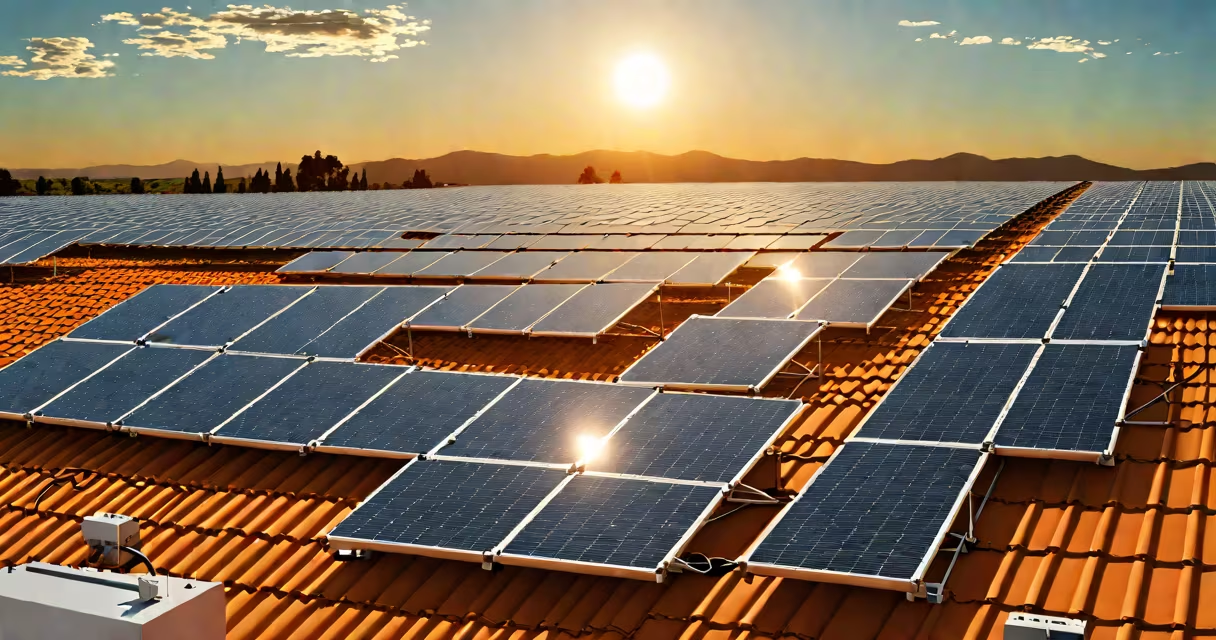
Solar energy means electricity generated from sunlight using photovoltaic (PV) cells or concentrated solar power systems. These technologies convert sunlight into usable energy, providing a renewable alternative to fossil fuels.
Solar energy harnesses the sun's rays through PV cells, which contain semiconductors like silicon. When sunlight hits these cells, it excites electrons, creating an electric current. This direct current (DC) is then converted to alternating current (AC) via an inverter, making it compatible with home or business electrical systems.
Concentrated solar power (CSP) systems use mirrors to focus sunlight onto a receiver, heating a fluid that produces steam to drive turbines. Unlike PV cells, CSP generates electricity indirectly through heat.
| Type | Description | Common Use |
|---|---|---|
| Photovoltaic (PV) Systems | Convert sunlight directly into electricity using semiconductor materials. | Residential rooftops, commercial buildings, portable devices. |
| Concentrated Solar Power (CSP) | Uses mirrors to concentrate sunlight, producing heat to generate electricity. | Large-scale power plants, utility grids. |
| Solar Thermal Systems | Heats water or air directly for household or industrial use. | Water heaters, space heating, swimming pool heating. |
Solar energy is used globally, with leading adopters including China, the U.S., and Germany. It's popular for reducing carbon emissions, lowering electricity bills, and increasing energy independence. Governments often incentivize solar adoption through tax credits and rebates.
A common misconception is that solar energy only works in sunny regions. While efficiency decreases on cloudy days, modern systems still generate power in overcast conditions. For example, Germany, known for its cloudy weather, ranks among the top solar energy producers worldwide.
Unlike wind or hydroelectric power, solar energy doesn't require large land areas or specific geographic features. However, it faces challenges like intermittency and high initial costs. Advances in battery storage and panel efficiency are addressing these issues.
Solar energy is often confused with passive solar design, which uses building materials to absorb and release heat naturally. While related, passive solar doesn't generate electricity.
Consider a home in California installing a 6 kW solar system. The PV panels cover about 400 square feet of the roof, generating roughly 8,400 kWh annually. After accounting for system costs and incentives, the homeowner saves $1,200 yearly on electricity bills while reducing their carbon footprint by 15 tons of CO2 over 25 years.