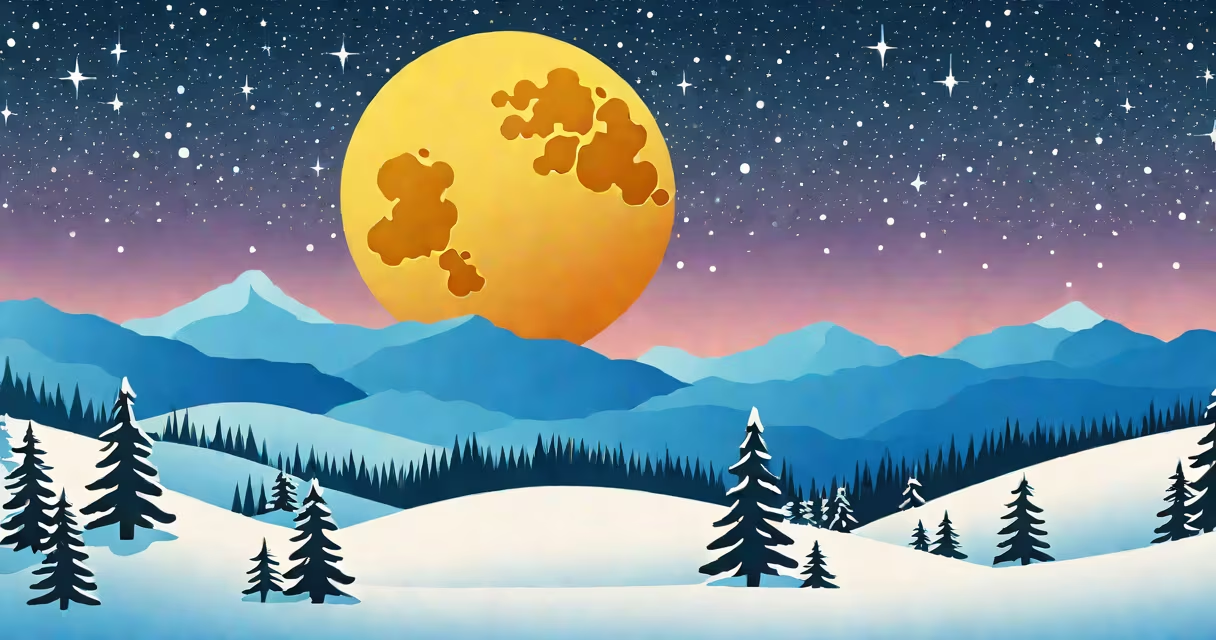
A snow moon is the full moon in February, named for the heavy snowfall typical of this month. Its timing shifts yearly because the lunar cycle doesn't align perfectly with our calendar.
The moon orbits Earth every 27.3 days, but full moons occur roughly monthly (29.5 days apart) due to Earth's movement around the sun. This means the snow moon can fall between late January and early March. In 2023, it appeared on February 5.
Many cultures assign names to full moons, often tied to seasonal changes. The snow moon is part of a tradition from Native American tribes, who tracked time by lunar cycles. Other well-known named moons include:
| Month | Moon Name | Origin |
|---|---|---|
| January | Wolf Moon | Howling wolves in winter |
| February | Snow Moon | Heavy snowfall |
| March | Worm Moon | Earthworms emerging |
Named moons helped ancient cultures track seasons and plan activities like hunting, farming, and religious ceremonies. Today, they're mostly cultural references, though some still use them for planning outdoor events. The snow moon, for example, signals peak winter in many regions.
One non-obvious fact: the snow moon isn't always the coldest full moon. That depends on your location and local weather patterns. In 2021, the snow moon coincided with a rare deep freeze in Texas, but in other years, it's arrived during warmer spells.
Some confuse the snow moon with a blood moon or supermoon. A blood moon occurs during a lunar eclipse, turning the moon reddish. A supermoon happens when the moon is closest to Earth, appearing larger. The snow moon is simply the February full moon, with no special astronomical traits.
Another mistake: assuming the snow moon always falls in February., its date shifts yearly. In 2019, it appeared on February 19, while in 2022, it was on February 16.
I once watched the snow moon rise over a frozen lake in Minnesota. The reflection created a perfect circle of light on the ice, making the field glow. It was a striking reminder of how the moon influences our environment, even if we don't rely on it for survival anymore.
The snow moon is the February full moon, named for winter weather. Its timing varies yearly, and it's part of a tradition of naming moons to track seasons. While it lacks special astronomical features, its cultural significance remains strong.