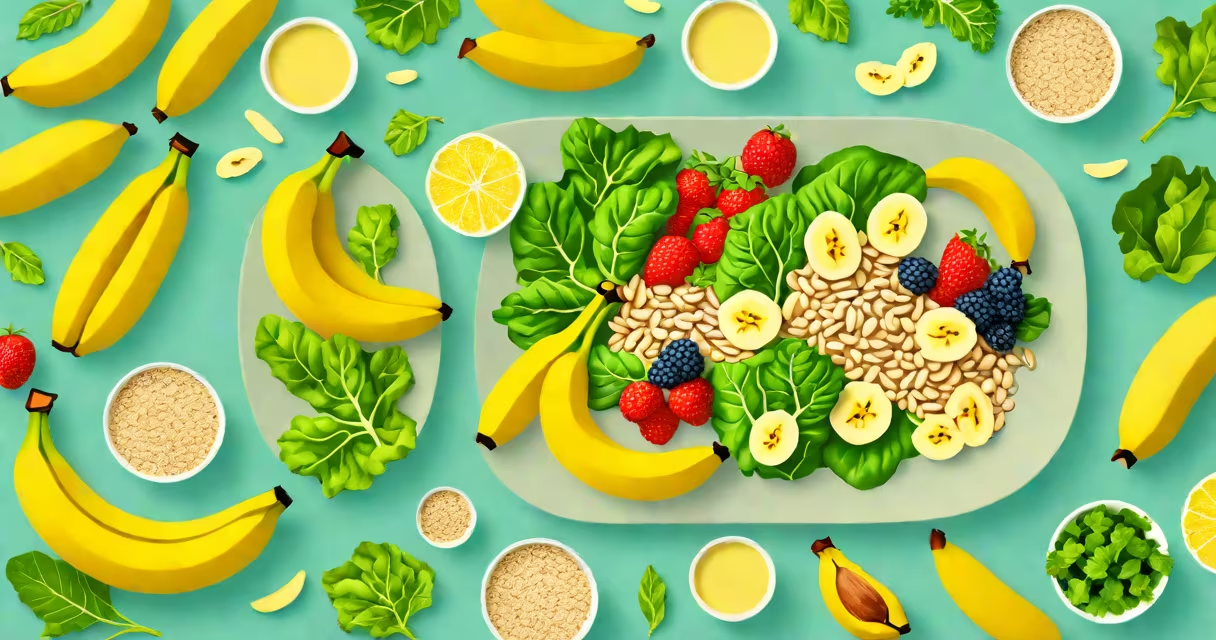
Certain foods help neutralize stomach acid and ease symptoms of acid reflux. These foods work by either reducing acid production, coating the stomach lining, or balancing pH levels.
Foods that help with acid typically fall into three categories: low-acid foods, alkaline foods, and foods with natural antacid properties. Low-acid foods like bananas, melons, and oatmeal don't trigger acid production. Alkaline foods such as leafy greens and cucumbers help balance stomach pH. Natural antacids like ginger and aloe vera coat the stomach lining, protecting it from excess acid.
| Food Type | Examples | Key Benefit |
|---|---|---|
| Low-Acid Foods | Bananas, melons, oatmeal | Minimize acid triggers |
| Alkaline Foods | Leafy greens, cucumbers, ginger | Balance stomach pH |
| Natural Antacids | Aloe vera, licorice, chamomile | Coat and protect stomach lining |
These foods are most effective when consumed regularly as part of a balanced diet. They help prevent acid reflux, heartburn, and other digestive issues. For example, drinking aloe vera juice daily can reduce stomach acidity over time. Eating a banana before meals may also help neutralize stomach acid.
Many people confuse acidic foods like citrus and tomatoes with those that help reduce acid. While these foods are acidic, they don't necessarily increase stomach acid in everyone. However, for those with acid reflux, avoiding them is often recommended.
One study published in the journal BMC Gastroenterology found that a diet rich in alkaline foods reduced symptoms of acid reflux in participants. The study suggested that eating more leafy greens, cucumbers, and ginger helped balance stomach pH and reduce discomfort.
I once worked with a client who suffered from chronic heartburn. After adjusting their diet to include more alkaline foods and natural antacids, their symptoms improved within two weeks. The key was consistency-small, frequent meals with the right foods made a noticeable difference.