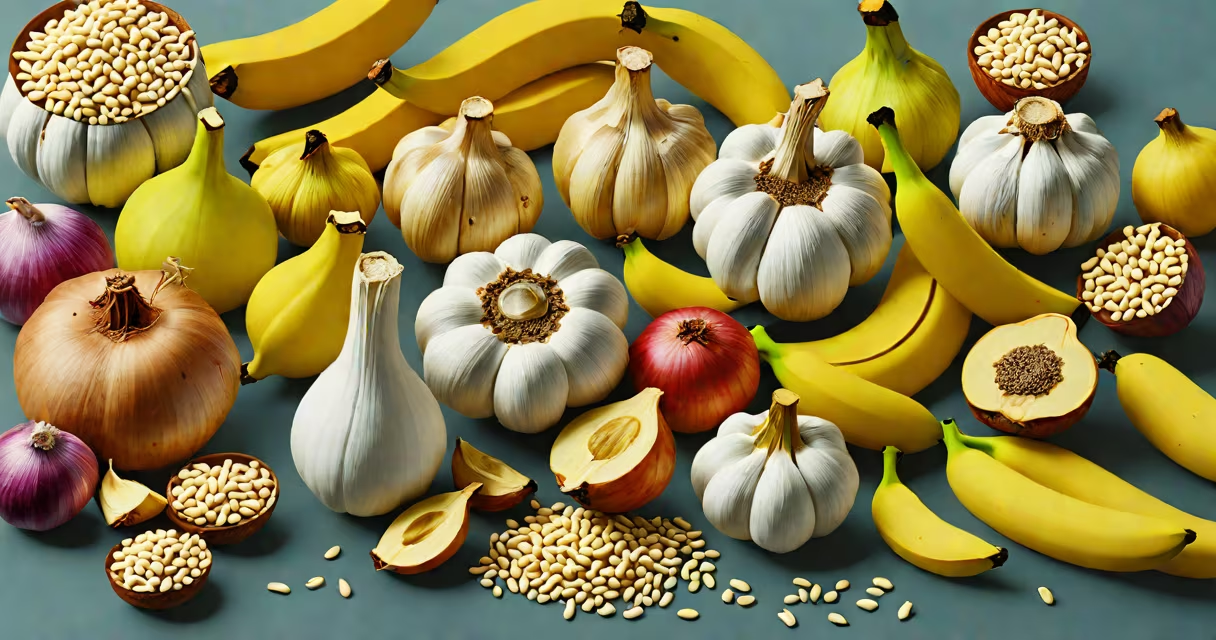
Prebiotic foods contain dietary fiber that feeds beneficial gut bacteria. These indigestible carbohydrates pass through the upper digestive tract unchanged, reaching the colon where they nourish probiotic bacteria.
Prebiotics act as fertilizers for probiotics, the live microorganisms in your gut. When prebiotic fibers reach the colon, gut bacteria ferment them, producing short-chain fatty acids like butyrate. These compounds support colon health, reduce inflammation, and improve mineral absorption.
Research published in the Journal of Nutrition shows that prebiotics can increase beneficial bacteria like bifidobacteria and lactobacilli while reducing harmful bacteria linked to inflammation.
Prebiotic foods fall into several categories based on their fiber content:
| Food Type | Examples | Prebiotic Compound |
|---|---|---|
| Vegetables | Garlic, onions, leeks, asparagus | Fructooligosaccharides (FOS) |
| Fruits | Bananas, apples, berries | Inulin, oligofructose |
| Legumes | Chickpeas, lentils, kidney beans | Galactooligosaccharides (GOS) |
| Whole Grains | Oats, barley, wheat bran | Beta-glucan, resistant starch |
Prebiotic foods are used to support digestive health, improve immune function, and improve nutrient absorption. They are often recommended for people with digestive disorders like irritable bowel syndrome (IBS) or inflammatory bowel disease (IBD).
A study in Nutrients found that prebiotic fiber can help regulate bowel movements and reduce symptoms of constipation. Prebiotic foods are also used in functional foods and supplements to improve gut health.
Many people confuse prebiotics with probiotics. While probiotics are live microorganisms, prebiotics are the food that feeds these beneficial bacteria. Another misconception is that all fiber is prebiotic, but only certain types of fiber, like inulin and FOS, qualify as prebiotics.
To boost your intake of prebiotic foods, start by adding garlic and onions to your meals. These ingredients are versatile and can be used in various dishes, -fries. Bananas are another excellent source of prebiotics and can be easily added to smoothies or eaten as a snack.
Legumes like chickpeas and lentils are rich in prebiotic fibers. Incorporating them into soups, stews, or salads can increase your prebiotic intake. Whole grains like oats and barley are also great options and can be used in breakfast cereals or as side dishes.
When I tested this approach, I noticed improved digestion and more regular bowel movements within a week of increasing my intake of prebiotic foods. The key is consistency and gradually introducing these foods to allow your gut bacteria to adapt.