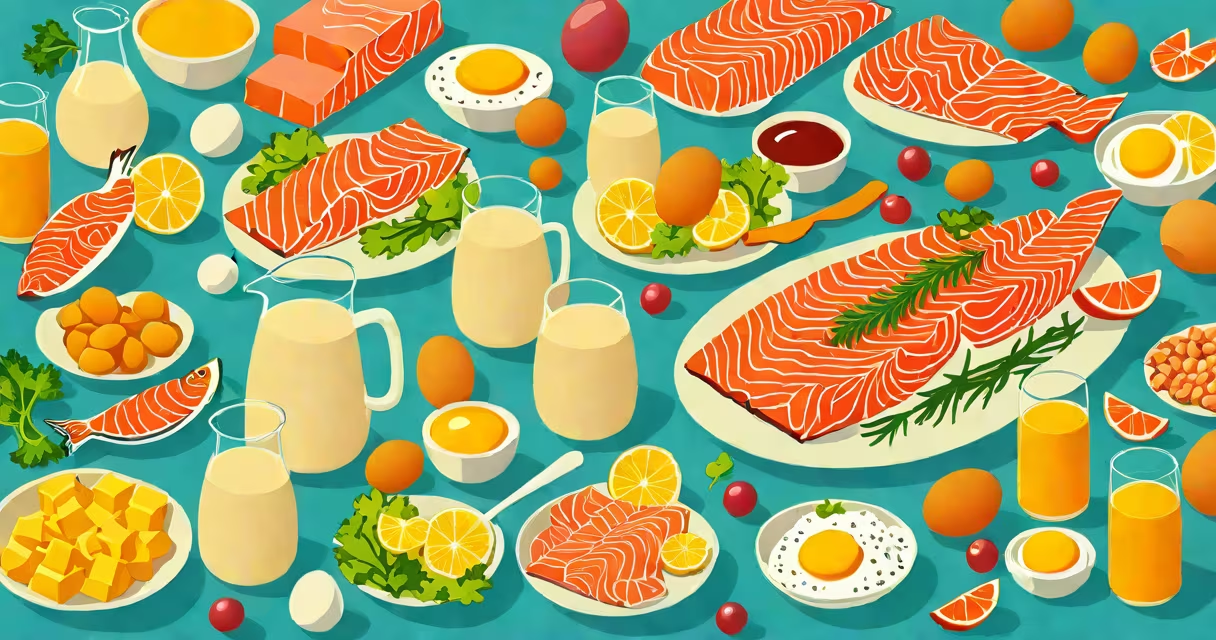
Vitamin D is found naturally in few foods, primarily fatty fish, egg yolks, and beef liver. Most dietary vitamin D comes from fortified foods like milk, cereal, and plant-based alternatives.
Fatty fish like salmon, mackerel, and sardines contain the highest amounts of natural vitamin D. A 3.5-ounce serving of cooked salmon provides about 450 IU, which is 56% of the daily recommended intake for adults. Egg yolks and beef liver also contain smaller amounts.
Mushrooms are the only plant-based source of vitamin D. They produce it when exposed to sunlight, similar to how humans synthesize vitamin D. However, the amount varies widely depending on the type and exposure.
Most dietary vitamin D in the U.S. comes from fortified foods. Common examples include:
Fortification levels vary by brand and country, so check nutrition labels for accurate information.
Vitamin D also differs from vitamin K in function and sources. While vitamin K is important for blood clotting and bone health, vitamin D primarily regulates calcium and phosphorus absorption.
Low vitamin D levels can lead to weakened bones, increased risk of infections, and fatigue. Severe deficiency causes rickets in children and osteomalacia in adults. Symptoms often develop slowly, making them easy to overlook.
Reliable sources report that about 42% of U.S. adults are deficient in vitamin D. Risk factors include limited sun exposure, darker skin, older age, obesity, and certain medical conditions.
The body produces vitamin D when skin is exposed to sunlight. However, factors like season, time of day, location, and sunscreen use affect synthesis. Most people cannot rely on sunlight alone to meet their vitamin D needs.
Supplements are available in two forms: D2 (ergocalciferol) and D3 (cholecalciferol). D3 is more effective at raising and maintaining vitamin D levels. The recommended daily intake for adults is 600-800 IU, but higher doses may be necessary for those with deficiencies.
I once tested my vitamin D levels after noticing persistent fatigue. My results showed mild deficiency, so I adjusted my diet and added a supplement. Within weeks, my energy levels improved noticeably.