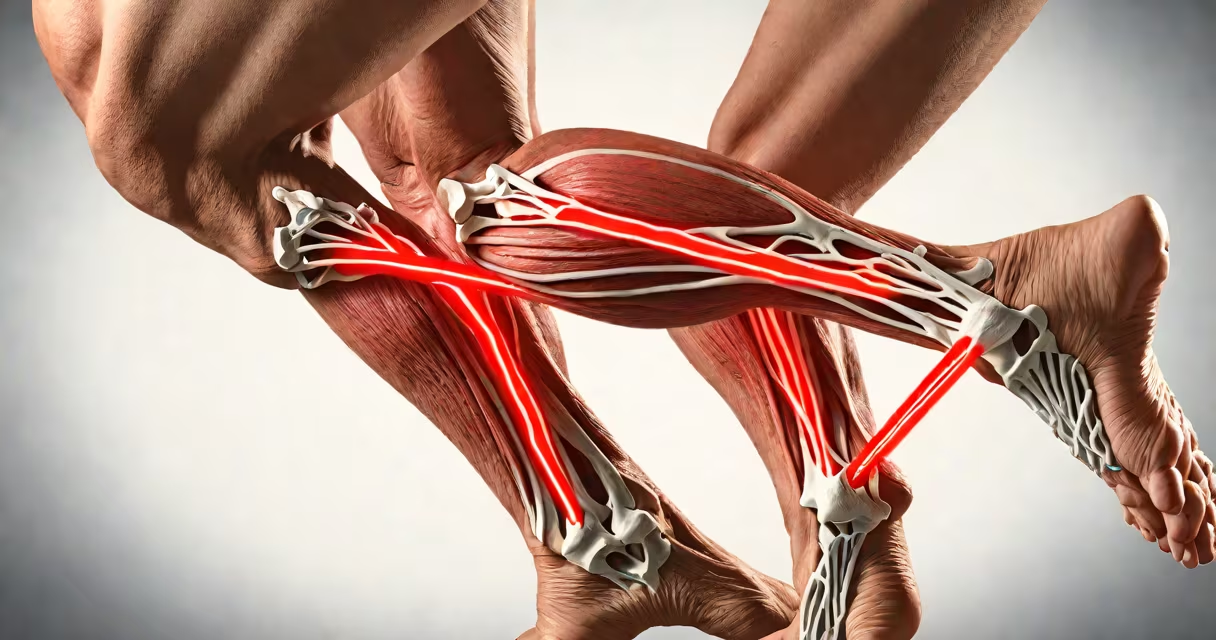
A pulled hamstring occurs when one or more of the three hamstring muscles at the back of your thigh overstretch or tear. This sudden injury causes immediate sharp pain, swelling, and bruising, often during sprinting or kicking. Recovery typically takes 2-6 weeks depending on severity.
The hamstrings (biceps femoris, semitendinosus, and semimembranosus) help bend your knee and extend your hip. A pull happens when these muscles are stretched beyond their limit during explosive movements. The injury grades from mild (micro-tears) to severe (complete rupture).
| Grade | Description | Recovery Time |
|---|---|---|
| Grade 1 | Mild strain with slight pain and tenderness | 1-3 weeks |
| Grade 2 | Partial tear with moderate pain, swelling, and bruising | 3-6 weeks |
| Grade 3 | Complete tear with severe pain, loss of function, and visible deformity | 6+ weeks (may require surgery) |
Pulling a hamstring usually happens during activities requiring sudden acceleration or deceleration, such as:
Most injuries occur when muscles are cold or fatigued. Warm-up exercises reduce risk.
Immediate treatment follows the RICE method: Rest, Ice, Compression, and Elevation. For a Grade 1 injury, I iced my thigh for 15 minutes every hour the first day, then gradually reduced frequency. Physical therapy helps restore flexibility and strength. Avoid high-impact activities until cleared by a doctor.
Severe tears may require surgery. Post-operative rehab includes gentle stretching and progressive resistance training. Full recovery can take months.
To prevent hamstring injuries:
According to the American Academy of Orthopedic Surgeons, proper warm-ups reduce injury risk by 25%.