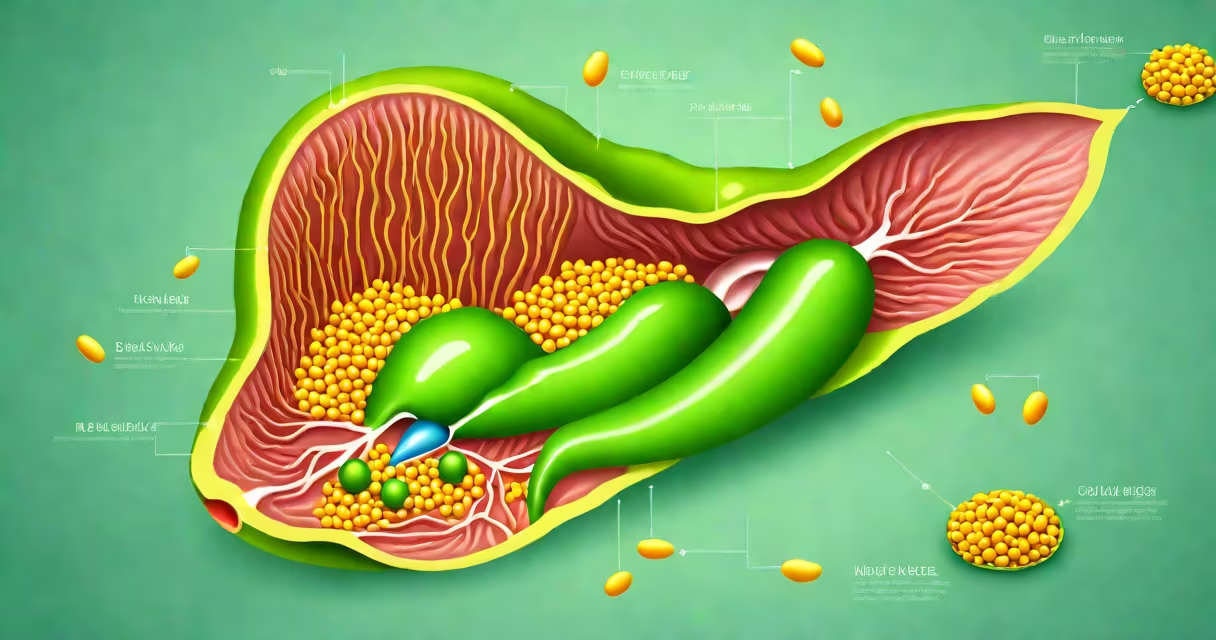
Gallbladder inflammation occurs when bile buildup irritates the organ's walls, typically due to gallstones blocking bile ducts. This condition, called cholecystitis, causes pain, fever, and digestive issues.
When gallstones form in the gallbladder or bile ducts, they can obstruct bile flow. Bile then accumulates, increasing pressure and causing inflammation. The gallbladder wall may swell, and bacteria can infect the stagnant bile, worsening inflammation.
| Type | Cause | Duration |
|---|---|---|
| Acute cholecystitis | Sudden gallstone blockage | Short-term |
| Chronic cholecystitis | Repeated inflammation | Long-term |
| Acalculous cholecystitis | No gallstones present | Varies |
Pain typically occurs in the upper right abdomen, often after eating fatty foods. Other symptoms include nausea, vomiting, fever, and jaundice. Pain may radiate to the right shoulder.
The primary risk factor is gallstones, but other conditions like infections, tumors, or metabolic disorders can also cause inflammation. Complications include gallbladder rupture, sepsis, or bile duct damage.