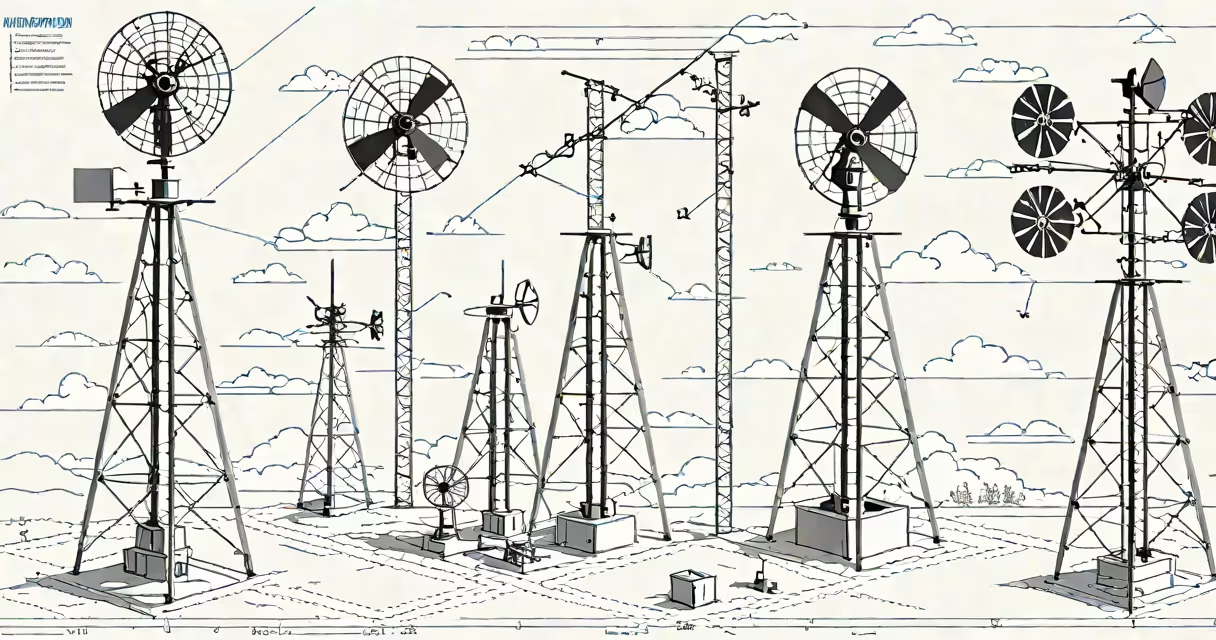
A wind vane measures wind direction by pointing toward the wind's origin. This simple yet effective instrument consists of a freely rotating arrow mounted on a vertical axis.
Wind vanes operate based on aerodynamic principles. The arrow's tail has greater surface area and air resistance than the pointed front. When wind blows, it pushes against the tail, causing the arrow to rotate until it aligns with the wind direction. The direction is typically measured in degrees relative to true north.
Modern wind vanes often incorporate electronic sensors that transmit data to weather stations or online platforms. These sensors convert mechanical rotation into electrical signals that computers can process and display as directional data.
| Type | Description | Typical Use |
|---|---|---|
| Mechanical | Traditional design with physical pointer | Residential weather stations, decorative purposes |
| Electronic | Digital sensors transmitting data | Professional weather monitoring, research |
| Aviation | High-precision models for airports | Airport runways, flight operations |
Many people confuse wind vanes with anemometers, which measure wind speed rather than direction. While both are essential weather instruments, they serve different purposes. Some advanced weather stations combine both functions in a single unit.
Another misconception is that wind vanes always point in the direction the wind is blowing. Actually, they point toward the wind's origin. For example, if the wind is coming from the north, the vane points north, indicating northerly winds.
Wind vanes have numerous applications beyond weather forecasting. Farmers use them to monitor wind patterns for crop spraying and irrigation. Sailors rely on them for navigation, especially when traditional methods aren't available. Even in urban planning, wind direction data helps design buildings that maximize natural ventilation.
In my experience working with renewable energy projects, wind vanes are important for determining optimal turbine placement. By analyzing long-term wind direction data, engineers can position turbines to capture the most consistent wind flows, improving energy production efficiency.
According to the National Weather Service, wind direction is defined as the direction from which the wind originates. This is why meteorologists specify directions like "northeasterly winds" - they're describing where the wind came from, not where it's going. This distinction is important for accurate weather prediction and analysis.
The Beaufort scale, developed by Sir Francis Beaufort in 1805, was one of the first systems to standardize wind measurement. While it primarily classified wind speeds, it also incorporated directional components that influenced its descriptive terms.