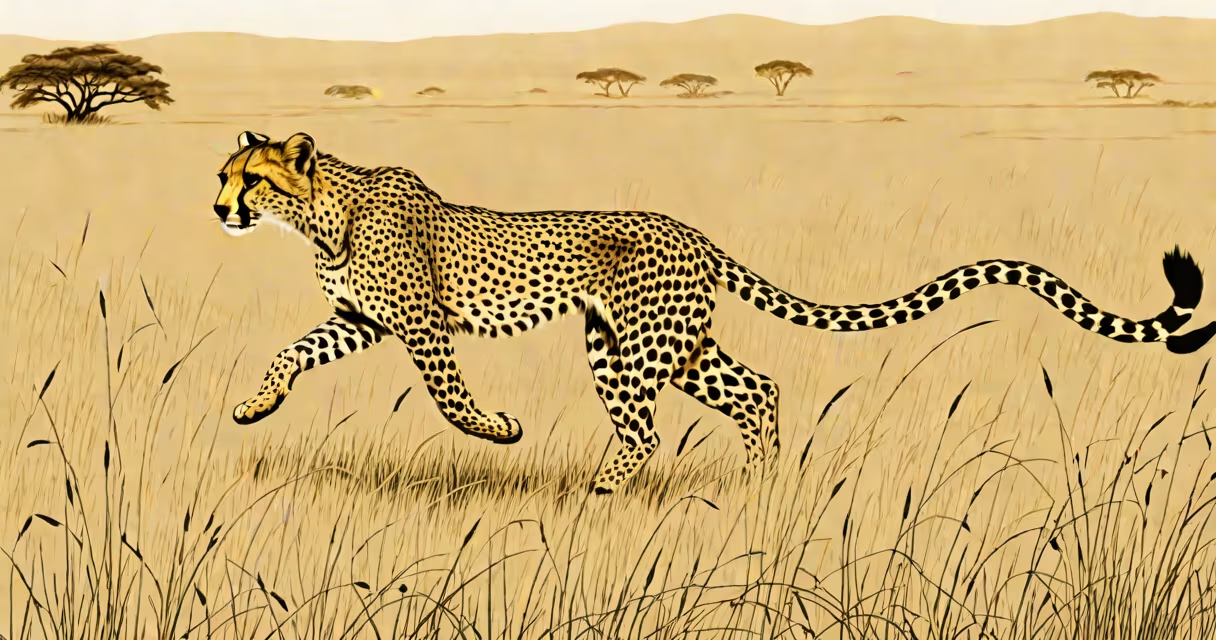
A cheetah's system is the network of living organisms and physical conditions in African grasslands that sustain the world's fastest land animal. This includes prey species, competing predators, and environmental factors like vegetation and water sources.
Cheetahs thrive in open landscapes where they can spot prey from afar and use their speed to hunt. Their ecosystems typically consist of:
According to the IUCN Red List, cheetahs occupy about 7% of their historic range today, primarily in southern and eastern Africa.
Cheetahs rely on open spaces to hunt effectively. They use tall grasses and bushes to hide while stalking prey, then burst from cover at speeds up to 60 mph (97 km/h) to chase down their target. This hunting strategy requires specific environmental conditions:
| Component | Role in System |
|---|---|
| Open grasslands | Allows cheetahs to spot prey from far away |
| Scattered trees | Provides shade and cover during rest periods |
| Water sources | Supports both cheetahs and their prey |
| Prey species | Main food source for cheetahs |
| Other predators | Competes for food and territory |
For example, in Namibia's NamibRand Nature Reserve, conservation efforts focus on maintaining these key components to support cheetah populations.
Many people assume cheetahs live in dense forests or jungles. However, these environments lack the open spaces cheetahs need to hunt effectively. Cheetahs are adapted to open plains and savannas, where their speed is most useful.
Another myth is that cheetahs are solitary animals. While they often hunt alone, they do form small social groups, especially mothers with cubs.
Human activities like agriculture, urban development, and poaching have reduced cheetah habitats. According to the World Wildlife Fund, fewer than 7,000 cheetahs remain in the wild due to habitat loss and prey depletion.
Conservation efforts, such as creating wildlife corridors and protecting prey species, are important for maintaining cheetah ecosystems. For instance, the Cheetah Conservation Fund works to restore habitats and reduce human-wildlife conflict.
During a visit to Kenya's Masai Mara National Reserve, I witnessed how cheetahs use the open savanna to their advantage. A cheetah stalked a Thomson's gazelle through the tall grass, then sprinted across the plain to catch it. The open field was essential for the cheetah's hunting success, demonstrating the importance of a well-balanced system.