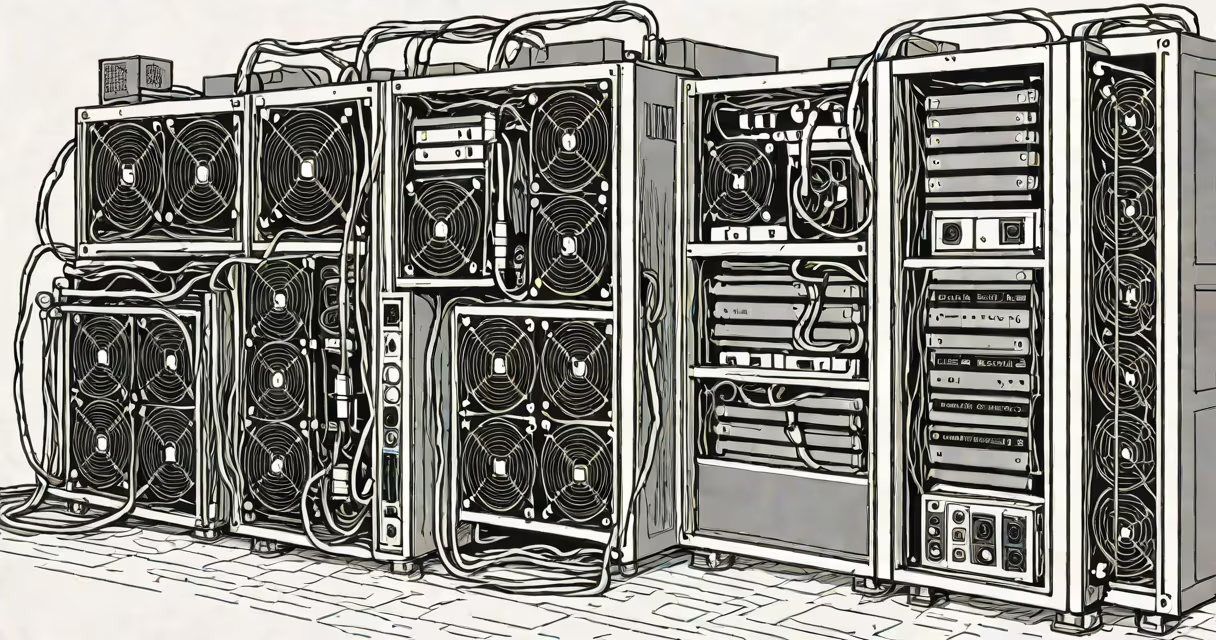
Crypto mining is the process of validating transactions on a blockchain network and adding them to the public ledger by solving complex mathematical puzzles. Miners use useful computers to compete for rewards in the form of newly minted cryptocurrency.
Miners group pending transactions into blocks and race to solve a cryptographic puzzle using specialized software. The first miner to find the solution broadcasts it to the network, and other nodes verify the work. Once confirmed, the block is added to the blockchain, and the successful miner receives a reward.
The difficulty of these puzzles adjusts dynamically to ensure new blocks are added at a consistent rate. For Bitcoin, this rate is roughly every 10 minutes. The process requires significant computational power and electricity, making it resource-intensive.
Crypto mining can be categorized based on the hardware used and the cryptocurrencies being mined:
| Type | Description | Example Cryptocurrencies |
|---|---|---|
| CPU Mining | Uses a computer's central processing unit (CPU). | Monero, Bytecoin |
| GPU Mining | Uses graphics processing units (GPUs) for faster calculations. | Ethereum, Ravencoin |
| ASIC Mining | Uses application-specific integrated circuits (ASICs) designed specifically for mining. | Bitcoin, Litecoin |
| FPGA Mining | Uses field-programmable gate arrays (FPGAs) for flexibility and efficiency. | Decred, Zcash |
Crypto mining serves several critical functions in blockchain networks. It secures the network by making it costly to alter past transactions, ensures decentralization by distributing the validation process among many participants, and introduces new cryptocurrency into circulation, acting as a form of monetary policy.
For example, Bitcoin's mining process makes it extremely difficult for any single entity to control the network, as they would need to possess more than 51% of the network's hash rate. This decentralization is a key feature that distinguishes cryptocurrencies from traditional fiat currencies.
Many people believe crypto mining is purely about creating new coins. However, the primary purpose is to validate transactions and secure the network. Mining also introduces new coins into circulation, but this is a secondary function.
Another misconception is that crypto mining is always profitable. In reality, profitability depends on factors like electricity costs, hardware efficiency, and the current price of the cryptocurrency being mined. For instance, mining Bitcoin with outdated hardware can result in losses due to high electricity consumption and low hash rates.
I once set up a small mining rig in my basement using spare GPUs. While it wasn't highly profitable, the experience provided valuable insights into the technical and economic aspects of crypto mining. It also highlighted the importance of monitoring electricity usage and maintaining optimal cooling to prevent hardware damage.