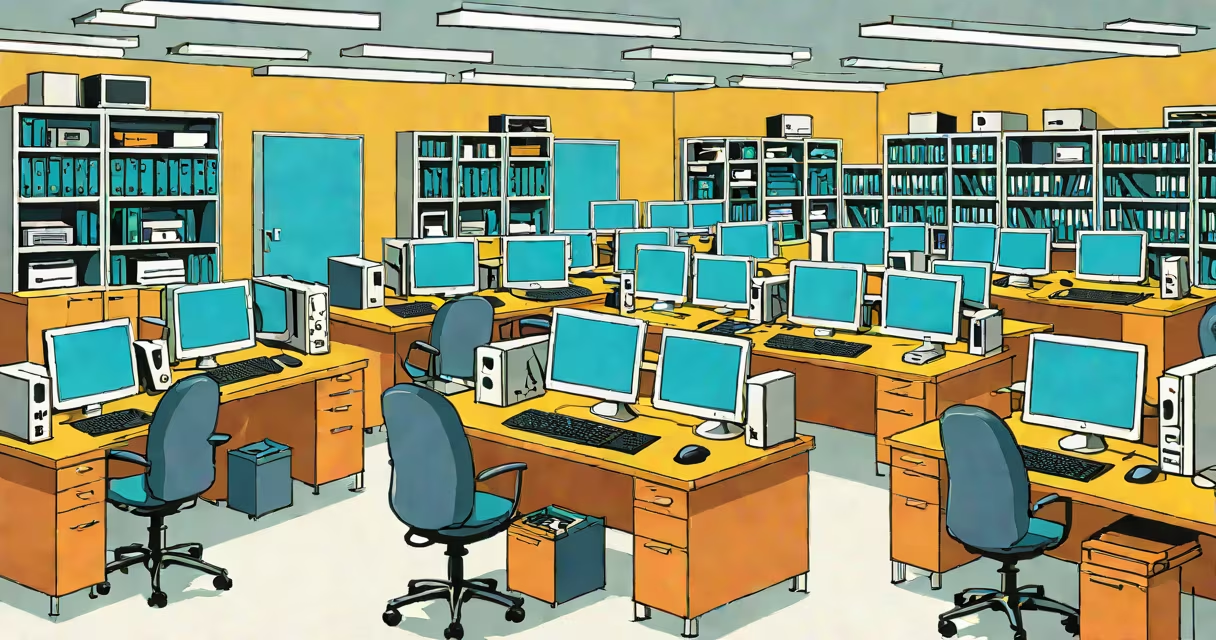
A computer laboratory is a specialized facility equipped with computers, accessories, and networking infrastructure to support research, education, or development work. These labs provide controlled environments for hands-on learning, experimentation, and collaborative projects.
Computer laboratories function as hubs for computational activities. They typically contain multiple workstations connected to servers, storage systems, and high-speed internet. Users access these resources to run software applications, analyze data, or develop programs. Many labs also feature specialized equipment like 3D printers, virtual reality headsets, or robotics kits for advanced projects.
Every computer laboratory includes core components:
| Type | Primary Purpose | Example Users |
|---|---|---|
| Instructional Labs | Teaching computer science concepts | University students |
| Research Labs | Advancing computational science | Graduate students, professors |
| Development Labs | Creating software applications | Programmers, engineers |
| Testing Labs | Validating system performance | QA engineers |
Many people confuse computer laboratories with regular classrooms or office spaces. Unlike typical rooms, computer labs require specialized electrical wiring, cooling systems, and cybersecurity measures. According to the National Science Foundation, proper lab design impacts both productivity and safety.
At MIT's Computer Science and Artificial Intelligence Laboratory, researchers use specialized workstations to develop machine learning algorithms. These systems require high-performance graphics processing units (GPUs) and specialized software frameworks. The lab's infrastructure supports collaborative projects involving hundreds of researchers worldwide.
Modern computer laboratories often incorporate virtualization technologies. This allows multiple operating systems to run simultaneously on the same physical hardware. For instance, a single workstation might host Windows for general computing, Linux for programming, and macOS for design work. This flexibility enhances the lab's utility for diverse projects.