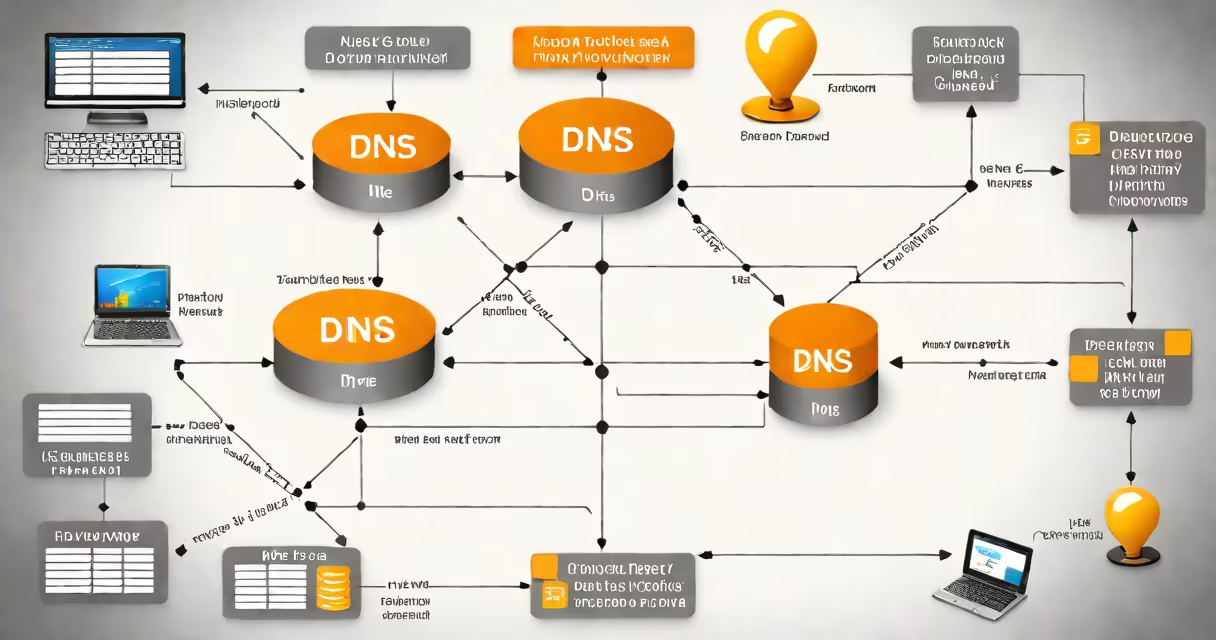
A DNS proxy server is an intermediary that forwards domain name system requests servers, caching responses to improve performance and privacy.
When you enter a URL, your device sends a request to the DNS proxy server instead of directly contacting a DNS server. The proxy checks its cache for the domain's IP address. If found, it returns the result immediately. If not, it forwards the request to a DNS server, caches the response, and sends it back to you.
| Type | Description | Common Use Case |
|---|---|---|
| Forwarding Proxies | Route requests to specific DNS servers | Corporate networks |
| Caching Proxies | Store DNS responses temporarily | ISP networks |
| Recursive Proxies | Handle complex queries recursively | Public DNS services |
DNS proxies improve speed by caching frequent requests and improve privacy by hiding your device's IP address from DNS servers. They also allow network administrators to filter content, block malicious domains, and redirect traffic.
For example, a school might use a DNS proxy to block access to gaming websites during school hours. Similarly, a business could use one to prevent employees from visiting phishing sites.
Many people confuse DNS proxy servers with ad-blocking proxy servers, which focus on filtering ads rather than managing DNS requests. While both can improve privacy, their primary functions differ.
Another misconception is that DNS proxies always improve speed. While they often do, a poorly configured proxy can introduce latency, especially if it's located far from the client or the DNS server.
I once set up a DNS proxy server for a small office to block access to known malware sites. Using a caching proxy, we reduced the time to resolve common domains by 30%. The setup also allowed us to log all DNS requests, helping us identify and block new malicious domains quickly.
For public DNS services, providers like Google and Cloudflare use recursive DNS proxies to handle billions of requests daily. These proxies cache responses and distribute the load across multiple servers to ensure fast and reliable service.