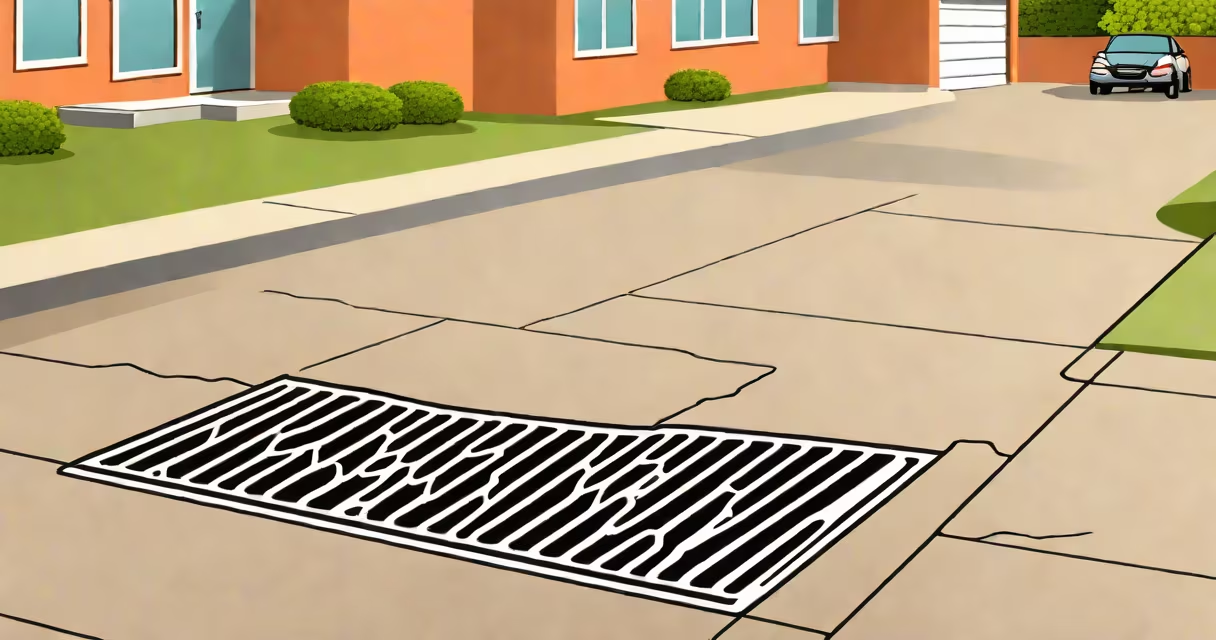
A surface drain is a shallow drainage system that collects water from driveways, patios, or yards and channels it away to prevent flooding and erosion. These systems typically consist of a grate, a basin, and a pipe that directs water to a lower area or a sewer system.
Surface drains operate by capturing water that pools on surfaces like driveways, patios, or lawns. The grate on top of the drain allows water to enter while keeping debris out. The water then flows into a basin beneath the grate, which is connected to a pipe that transports the water away from the area. This process helps to prevent water from pooling and causing damage to structures or landscaping.
There are several types of surface drains, each suited for different applications:
| Type | Description | Best For |
|---|---|---|
| Channel Drains | Long, narrow drains with grates that run along driveways or walkways | Driveways, walkways, patios |
| Point Drains | Single drains placed in low spots or areas prone to pooling | Yards, gardens, low spots |
| French Drains | Trench filled with gravel and a perforated pipe to redirect water | Large yards, slopes, areas with poor drainage |
Surface drains are commonly used in residential and commercial settings to manage water runoff. They are particularly useful in areas with heavy rainfall or poor natural drainage. By installing surface drains, property owners can protect their homes and landscapes from water damage, erosion, and flooding.
For example, a homeowner in a region with frequent heavy rains might install a channel drain along their driveway to prevent water from pooling and causing damage to the pavement. Similarly, a business owner might use point drains in their parking lot to ensure that water drains quickly and efficiently, reducing the risk of accidents due to slippery surfaces.
One common misconception is that surface drains are only useful for large properties or commercial buildings. In reality, they can be beneficial for any property, regardless of size. Even small yards can benefit from point drains placed in low spots to prevent water from pooling and causing damage to plants or structures.
Another misconception is that surface drains are difficult to install. While some types of drains, like French drains, require more extensive excavation, others, like point drains, can be installed relatively easily with basic tools and materials. Many homeowners choose to install surface drains themselves to save on installation costs.
I once helped a neighbor install a point drain in their backyard. The process was straightforward: we dug a hole, placed the drain basin, connected it to a pipe, and covered it with a grate. The drain effectively solved their pooling issue, and they were able to enjoy their yard without worrying about water damage.