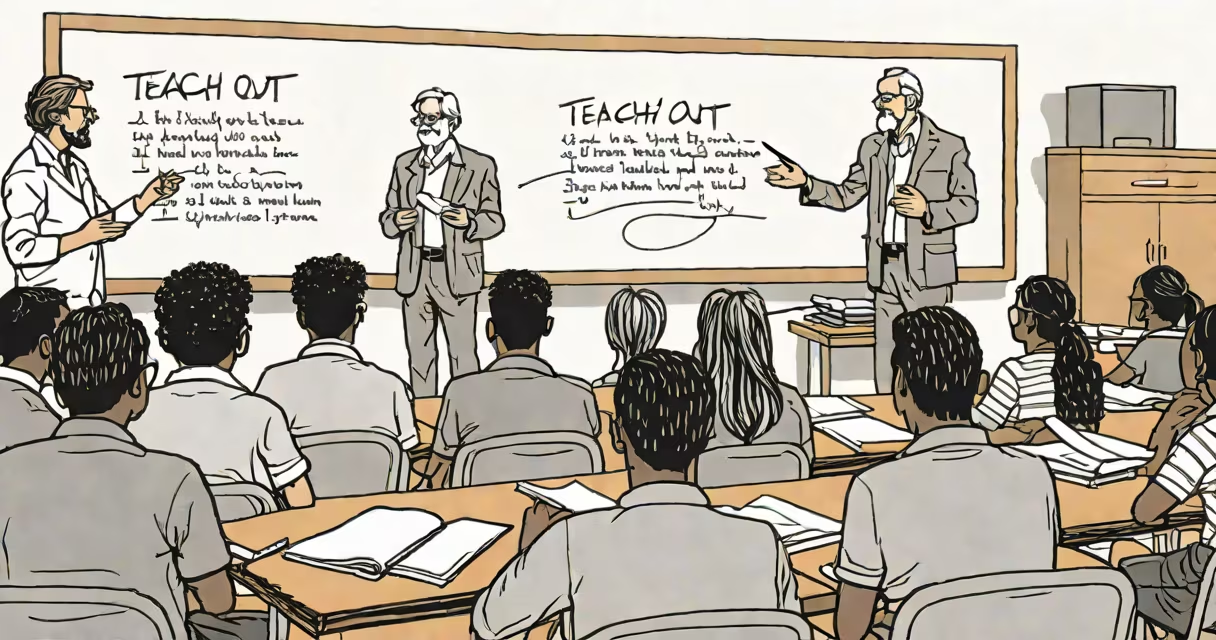
A teach-out plan is a formal agreement ensuring students can complete their academic programs if their institution closes or discontinues the program. It outlines how faculty, staff, and resources will support students during the transition.
When a college or university decides to close a program, it must create a teach-out plan to protect enrolled students. The plan includes specific steps for transferring credits, adjusting schedules, and providing alternative learning options. For example, a school closing its nursing program might partner with another institution to allow students to finish their degrees there.
Teach-out plans typically include:
Another mistake is assuming teach-out plans only apply to entire institutions closing. They can also apply to individual programs within a school. For instance, if a university discontinues its computer science major, it must develop a teach-out plan for current students.
In 2019, the University of North Carolina at Greensboro closed its dance program. The school created a teach-out plan that allowed students to transfer to nearby universities, such as the University of North Carolina at Charlotte, to complete their degrees. The plan included credit transfer agreements, faculty support, and financial aid counseling to help students transition smoothly.
According to the U.S. Department of Education, teach-out plans are required under federal regulations to protect students' rights. Without them, students might lose credits or face difficulties completing their education. Institutions must submit teach-out plans for approval before discontinuing programs.
Teach-out plans also help maintain trust between schools and students. When handled properly, they minimize disruption and ensure students can still achieve their academic goals.