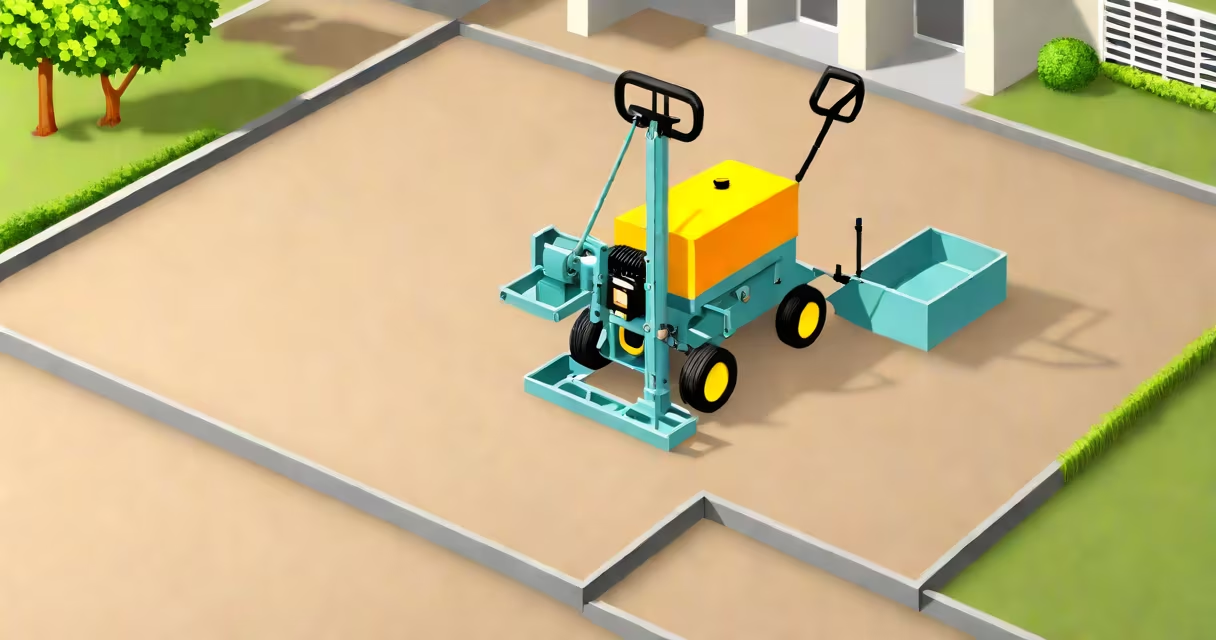
A trowel machine is a power tool designed to smooth and finish concrete surfaces after pouring. These machines replace manual labor with rotating blades that level, compact, and polish concrete.
Trowel machines operate by spinning large metal blades across the surface of wet concrete. The rotation compacts the material, removes air pockets, and creates a smooth finish. Operators control the speed and angle of the blades to achieve different textures,.
| Type | Description | Common Use |
|---|---|---|
| Walk-behind trowels | Self-propelled machines with adjustable blades | Large slabs, parking lots, warehouses |
| Ride-on trowels | Larger machines with seating for the operator | Very large areas, commercial projects |
| Remote-controlled trowels | Smaller machines operated via remote control | Tight spaces, detailed work |
Trowel machines are essential in construction projects requiring large concrete surfaces, such as floors, driveways, and industrial sites. They improve efficiency, consistency, and finish quality compared to manual troweling. For example, a grinder machine may follow a trowel machine to refine the surface further.
Many assume trowel machines only create smooth finishes. However, they can also produce textured surfaces by adjusting blade angles., while they speed up the process, they require skilled operators to avoid issues like uneven surfaces or improper curing.
I've seen trowel machines in action on a warehouse project. The operator adjusted the blades to create a slightly rough texture for better traction, proving their versatility beyond just smoothing concrete.
When selecting a trowel machine, consider factors like engine power, blade size, and maneuverability. For small projects, a walk-behind trowel with 10-horsepower may suffice. Larger projects benefit from ride-on models with 20+ horsepower and wider blades for coverage.
According to the American Concrete Institute, proper machine selection and operation impact the final concrete quality and durability.