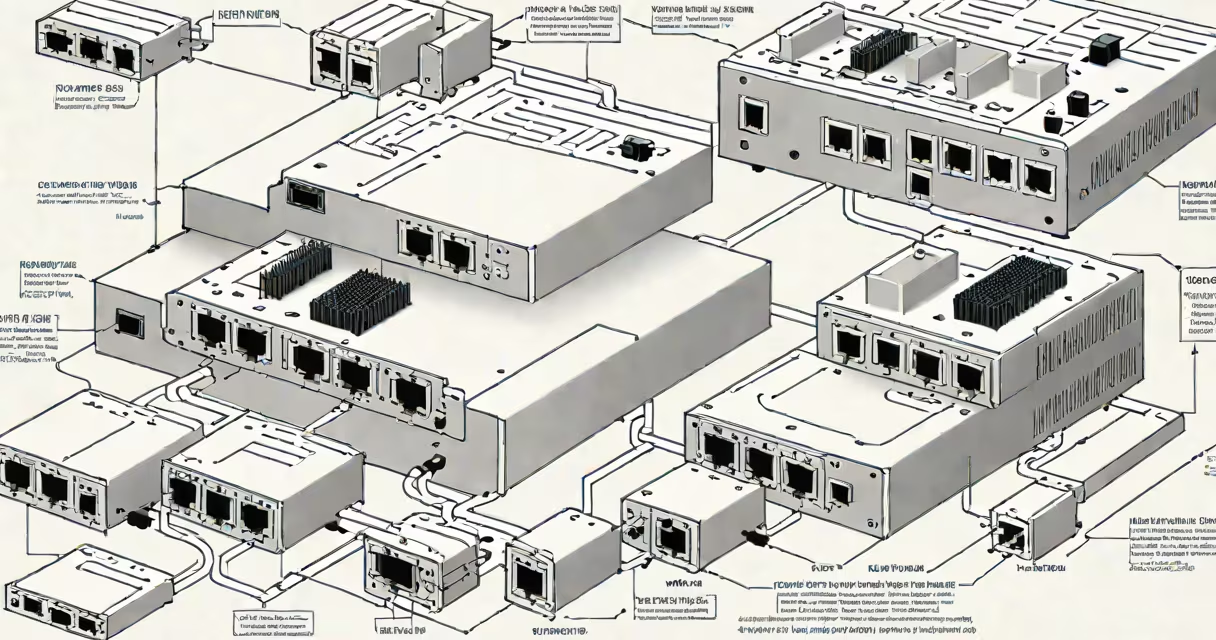
An Ethernet port connects devices to wired networks for faster, more reliable internet access than wireless connections. These standard **LAN ports** appear on routers, computers, and other networked hardware.
Ethernet ports use twisted-pair copper wires to transmit data via electrical signals. When a device connects to a port, it communicates with the network using a protocol called **Ethernet**, which organizes data into frames for transmission. This wired connection provides lower latency and higher bandwidth than Wi-Fi, making it ideal for high-performance tasks.
Ethernet ports come in several varieties, each supporting different speeds and cable types:
| Type | Speed | Cable Type |
|---|---|---|
| 10/100/1000BASE-T | 10 Mbps, 100 Mbps, or 1 Gbps | Cat 5e, Cat 6, Cat 6a |
| 10GBASE-T | 10 Gbps | Cat 6a, Cat 7 |
| SFP/SFP+ | 1 Gbps to 100 Gbps | Fiber optic |
Ethernet ports appear in homes, offices, and data centers. They connect devices like computers, gaming consoles, and smart TVs to routers for stable internet access. In offices, they link workstations to local area networks (LANs) for file sharing and internal communication. Data centers use them to connect servers and switches, often with fiber-optic SFP ports for high-speed, long-distance connections.
Many people confuse Ethernet ports with USB ports, but they serve different purposes. USB ports transfer data between devices and provide power, while Ethernet ports exclusively handle network traffic. Another mistake is assuming all Ethernet ports support the same speeds. Older ports may only support 10 or 100 Mbps, while newer ones handle gigabit speeds or more.
I once helped a neighbor set up a home office. Their Wi-Fi kept dropping during video calls, so I suggested using an Ethernet cable to connect their computer directly to the router. The difference was immediate-their calls became crystal clear, and file transfers sped up. This real-world example shows the practical benefits of Ethernet ports.
Some Ethernet ports have special functions. For example, **PoE (Power over Ethernet)** ports supply power to devices like IP cameras and VoIP phones through the Ethernet cable. Other ports may support advanced features like link aggregation, combining multiple ports for higher bandwidth.