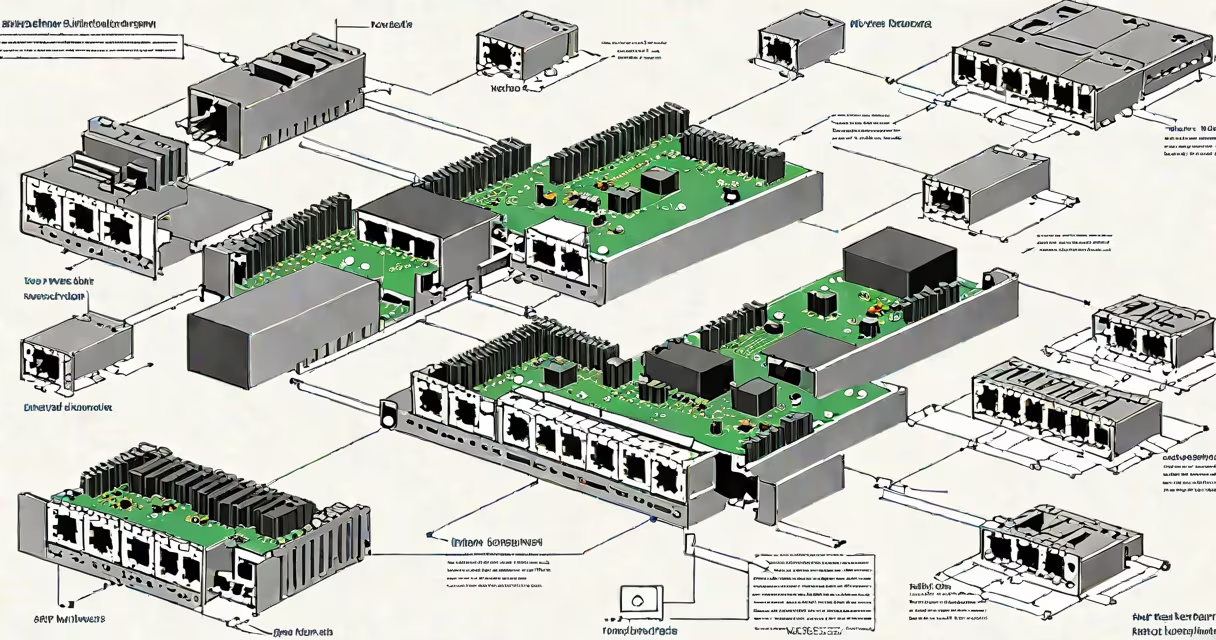
A SFP port is a modular networking interface that accepts small form-factor pluggable (SFP) transceivers to connect fiber optic or copper networking cables. These ports enable flexible, high-speed connections in data centers and enterprise networks.
SFP ports work by providing a slot where you insert an SFP transceiver module. The module handles the electrical-to-optical conversion needed for fiber communication. This separation allows network equipment to support different cable types and speeds without hardware changes.
SFP ports come in several varieties:
These ports appear in:
For example, a data center might use SFP+ ports to connect servers to a 10Gbps fiber core, while connecting to the internet through standard Ethernet ports on the edge.
Many confuse SFP ports with standard Ethernet ports. Unlike fixed Ethernet ports, SFP ports don't have built-in electronics - they require an inserted module to function. This modularity is their key advantage.
Another misconception is that SFP ports only work with fiber optics. While fiber is common, SFP modules exist for copper twisted pair cables too, supporting distances up to 100 meters.
When building a network lab setup, I used a switch with both SFP and standard Ethernet ports. The SFP ports connected high-speed fiber links between core switches, while standard ports handled regular office connections. This hybrid approach demonstrated the flexibility SFP ports provide for different network segments.
SFP ports offer several benefits:
According to the IEEE 802.3 standard, SFP ports support various protocols including Ethernet, Fibre Channel, and SONET/SDH. This makes them versatile for different networking applications.