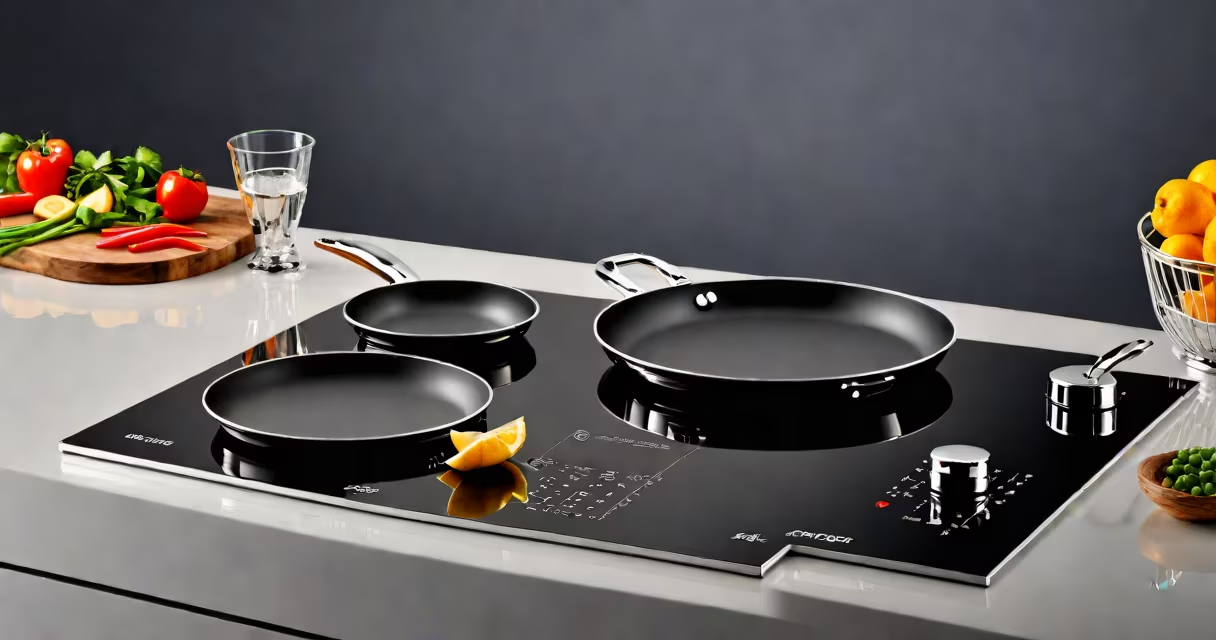
An induction cooktop is a flat, glass-surface stove that uses magnetic fields to heat pots and pans directly through electromagnetic induction. Unlike gas or traditional electric stoves, it doesn't rely on heating coils or open flames.
Induction cooktops generate an alternating current through copper coils beneath a smooth glass surface. When you place a compatible pot or pan on the burner, the magnetic field transfers energy directly to the cookware, causing it to heat up almost instantly. The cooktop itself stays cool because heat is generated only in the metal of the pot or pan.
This process is more efficient than traditional electric or gas burners because nearly all the energy goes into heating the cookware, rather than the surrounding air. According to the U.S. Department of Energy, induction cooktops can be up to 85% efficient, compared to about 70% for electric coil burners and 40% for gas burners.
| Type | Key Features | Best For |
|---|---|---|
| Freestanding | Built-in oven plus induction cooktop in one unit | Kitchens needing a complete replacement |
| Drop-in | Fits into existing countertop cutouts | Remodeling projects |
| Portable | Single-burner units for small spaces | Apartments, RVs, or extra cooking space |
Induction cooktops offer several advantages over traditional stoves. They heat up and cool down faster, making them ideal for precise temperature control. This is especially useful for recipes requiring rapid changes in heat, such as stir-frying or candy-making.
They're also safer because the surface remains relatively cool, reducing the risk of burns. Many models come with child-lock features and automatic shutoff if no cookware is detected.
Energy efficiency is another major benefit. Since induction cooktops don't waste heat warming the air, they consume less electricity than conventional electric stoves. According to a study by the U.S. Department of Energy, induction cooking can reduce energy use by up to 65% compared to gas stoves.
Many people think induction cooktops require special cookware. While it's true that the cookware must be magnetic (typically stainless steel or cast iron), many modern pots and pans are induction-compatible. Some brands even sell induction disk converters that allow non-magnetic cookware to work on induction surfaces.
Another myth is that induction cooking lacks the power needed for high-heat cooking. In reality, induction burners can reach extremely high temperatures quickly. For example, the highest setting on an induction cooktop can boil water in under two minutes-a task that takes much longer on a gas stove.
When I installed an induction cooktop in my kitchen, I was surprised by how responsive it was. Adjusting the temperature was as simple as turning a knob, and the heat changes were immediate. I also noticed how easy it was to clean-the smooth glass surface wiped down easily, unlike the crevices of a traditional electric coil burner.
However, I did have to replace a few of my older aluminum pots since they weren't magnetic. After investing in a few new stainless steel pans, though, I found the cooking experience improved.
Compared to gas stoves, induction cooktops provide more precise temperature control and are safer for indoor use, as they produce no open flames or combustion gases. However, some chefs still prefer gas for certain high-heat cooking techniques, like searing steaks.
Traditional electric coil or radiant glass cooktops are slower to heat and cool, making them less efficient for recipes requiring quick adjustments. They also retain heat longer, increasing the risk of accidental burns.
Induction cooktops offer a modern, efficient, and safe alternative to traditional stoves. Their ability to heat cookware directly through magnetic fields makes them faster, more energy-efficient, and easier to clean than gas or electric stoves. While they require magnetic cookware, their benefits make them a worthwhile investment for many home cooks.