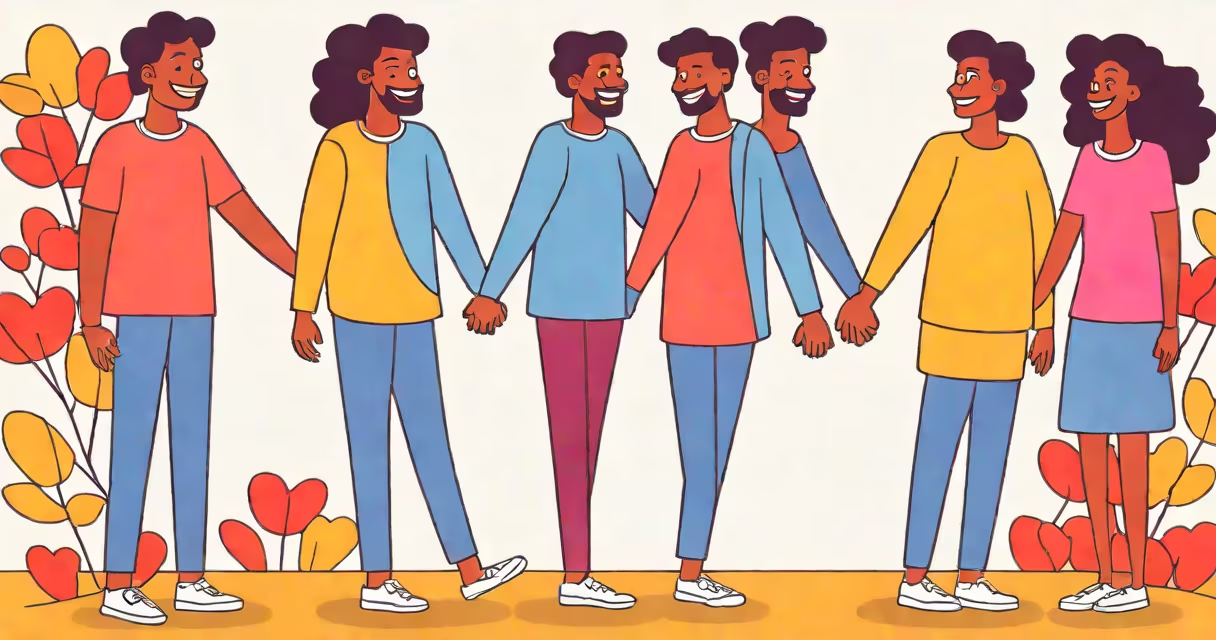
Being polyamorous means maintaining multiple romantic relationships with the consent and knowledge of all involved. It's a form of ethical non-monogamy where individuals prioritize honesty, communication, and mutual agreement.
Polyamory operates on the principle that love isn't limited to a single partner. Relationships are built on transparency, where everyone agrees to the arrangement and understands the dynamics. This differs from cheating, where secrecy and deception are involved.
For example, Sarah might be in a relationship with both Alex and Jamie. All three openly discuss boundaries, expectations, and emotional needs. They might agree that Sarah spends weekends with Alex but has weekly check-ins with Jamie. This structure ensures everyone feels valued and respected.
Polyamorous relationships come in various forms, including:
| Type | Description |
|---|---|
| Hierarchical Polyamory | Partners rank relationships by importance, often with a primary partner and secondary partners. |
| Non-Hierarchical Polyamory | All relationships are considered equal, with no ranking system. |
| Solo Polyamory | Individuals prioritize their independence while maintaining multiple relationships. |
Many people embrace polyamory because it aligns with their values of openness and autonomy. Research from the Journal of Sex & Marital Therapy shows that ethical non-monogamy can lead to higher relationship satisfaction when practiced with clear communication.
For instance, Mark might feel fulfilled by connecting with multiple partners, each offering different emotional or intellectual support. This contrasts with monogamy, where one partner fulfills all needs.
Many assume polyamory is just about sex, but it's primarily about emotional connections. Another myth is that polyamorous relationships are unstable, yet studies from the Journal of Sex & Marital Therapy suggest they can be just as stable as monogamous ones when built on trust.
I've seen this firsthand. A friend of mine practices polyamory and describes it as enriching, allowing her to explore different facets of love with multiple partners. She emphasizes that it requires more communication than monogamy, not less.
Polyamory isn't without its challenges. Jealousy can arise, but many address it through open dialogue and agreed-upon strategies. For example, couples might set boundaries like "no overnight stays with new partners for the first three months."
Another challenge is societal stigma. Many people misunderstand polyamory, assuming it's selfish or promiscuous. Education and advocacy help combat these misconceptions.