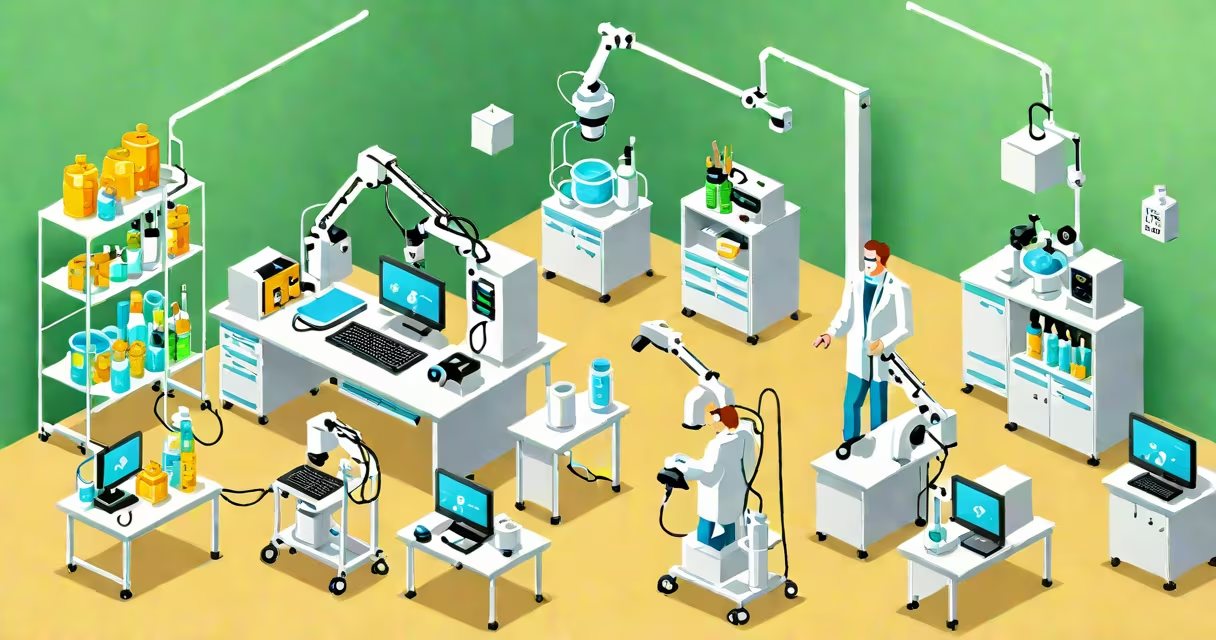
Biotechnology is the use of living organisms or their products to make or modify useful things. It combines biology and technology to solve problems in medicine, agriculture, and industry.
Biotechnology leverages natural processes to create new products or improve existing ones. Scientists manipulate DNA, proteins, or cells to achieve desired outcomes. For example, they might engineer bacteria to produce insulin or modify crops to resist pests.
| Type | Description | Example |
|---|---|---|
| Red Biotechnology | Medical applications | Vaccines, gene therapy |
| White Biotechnology | Industrial processes | Biofuels, biodegradable plastics |
| Green Biotechnology | Agricultural applications | Genetically modified crops, pest-resistant plants |
Biotechnology is used in various fields to address specific needs. In medicine, it helps develop treatments for diseases like cancer. In agriculture, it improves crop yields and resistance to environmental stressors. Industries use it to create sustainable materials and reduce waste.
For instance, biotechnology is important for producing insulin for diabetes treatment. Scientists insert the human insulin gene into bacteria, which then produce the hormone. This method is more efficient and cost-effective than extracting insulin from animals.
Many people confuse biotechnology with bioengineering. While both fields involve manipulating biological systems, biotechnology focuses on practical applications, whereas bioengineering often involves designing and building biological systems from scratch.
Another misconception is that biotechnology is solely about genetic modification. In reality, it encompasses many techniques, including fermentation, cell culture, and enzyme technology. These methods have been used for centuries, long before the advent of genetic engineering.
One notable application of biotechnology is the development of CRISPR-Cas9, a gene-editing tool. This technology allows scientists to precisely edit DNA sequences, correcting genetic disorders or enhancing desirable traits in organisms. For example, researchers have used CRISPR to modify mosquitoes to resist malaria, potentially reducing the spread of the disease.
I once visited a biotech lab where scientists were working on developing a new type of biofuel from algae. The process involved cultivating algae in large tanks, extracting lipids, and converting them into fuel. This method is more environmentally friendly than traditional fossil fuels and highlights the potential of biotechnology to address global energy challenges.