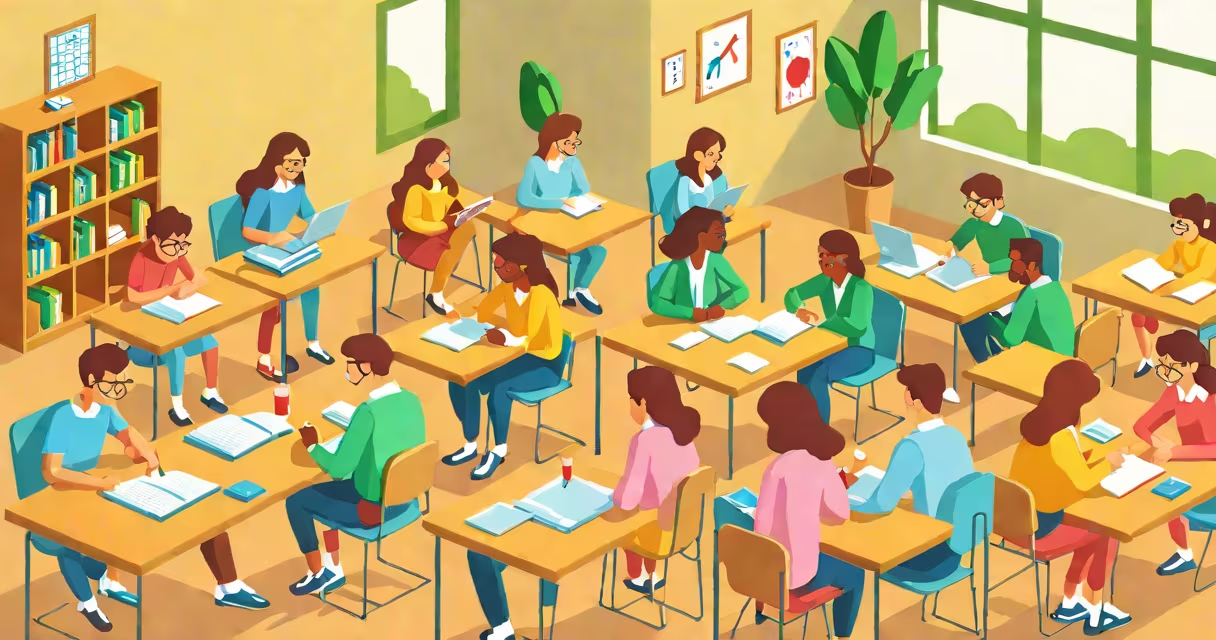
Character education in schools is a teaching approach that promotes core ethical values like honesty, respect, and responsibility to improve student behavior and academic outcomes.
Schools integrate character education through daily lessons, activities, and school-wide programs. Teachers model good character, and students practice values through role-playing, discussions, and community service. For example, a school might dedicate one week per month to exploring a specific value, such as kindness, through classroom activities and school-wide events.
Character education typically focuses on 11 core values identified by the Character Counts program:
These values are taught explicitly and reinforced through school policies, student leadership opportunities, and partnerships with families and communities.
Research shows that character education improves academic performance, reduces behavioral issues, and fosters a positive school climate. A study by the University of Pennsylvania found that schools implementing character education programs saw a 10% increase in academic achievement and a 20% decrease in disciplinary referrals.
Character education also prepares students for real-world challenges. For instance, teaching responsibility helps students manage their time and meet deadlines, while teaching empathy encourages them to work well with others.
Some people confuse character education with religious instruction or political indoctrination. However, character education is secular and focuses on universal values that apply to all cultures and backgrounds. It aims to develop good citizens, not promote any specific belief system.
Another misconception is that character education replaces academic instruction. In reality, it complements academics by creating a supportive environment where students feel safe and motivated to learn. For example, teaching respect helps reduce bullying, allowing students to focus on their studies.
At Johnston Middle School, character education is woven into the daily routine. Each morning, students recite a pledge that includes values like respect and responsibility. Teachers incorporate these values into lesson plans, such as having students analyze literature through the lens of fairness or discuss real-world scenarios that require courage. The school also hosts monthly assemblies where students are recognized for demonstrating good character.
By integrating character education into the school day, Johnston Middle School has seen a significant improvement in student behavior and academic performance. The school reports fewer disciplinary issues and higher test scores since implementing the program.