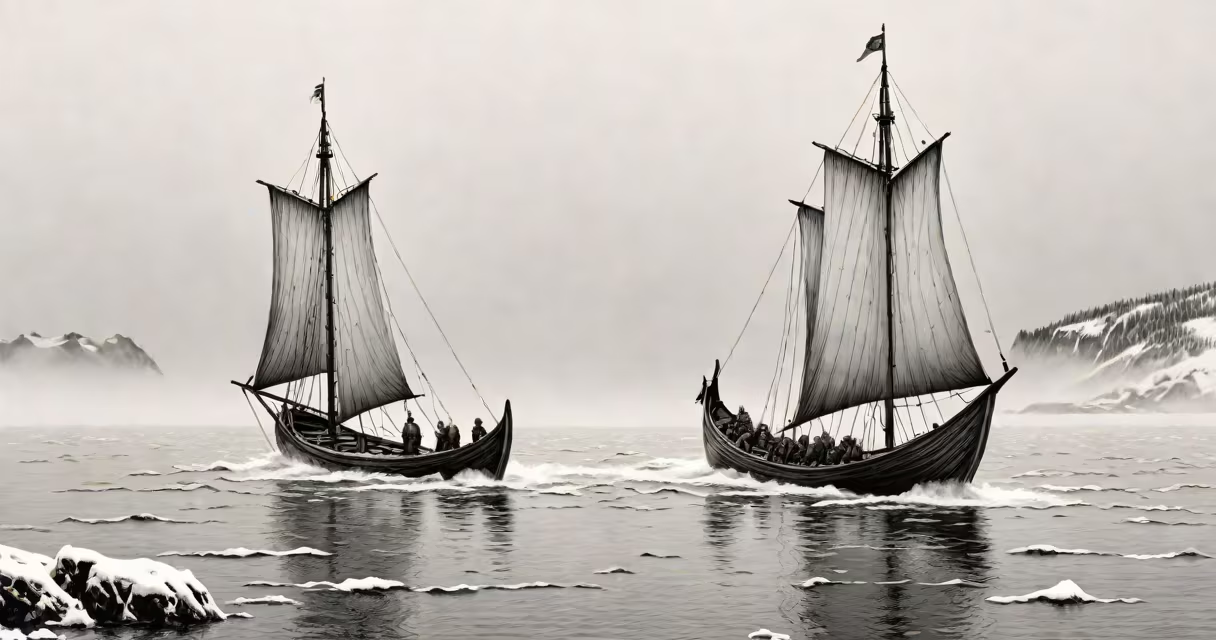
Erik the Red (Eiríkr Rauði) was a Norse explorer and chieftain famous for founding the first Norse settlement in Greenland. Born in Norway around 950 AD, he became one of the most significant figures in Viking Age exploration.
Erik was born in Norway but moved to Iceland after being exiled for manslaughter. He later embarked on expeditions west of Iceland, eventually reaching and colonizing Greenland. His nickname "the Red" likely came from his hair color or temper.
After being banished from Iceland, Erik sailed west and discovered Greenland around 982 AD. He spent three years exploring the coast, naming it "Greenland" to attract settlers with its pleasant-sounding name. In 985 AD, he returned to Iceland and convinced others to join him in settling Greenland.
Erik established two settlements in Greenland: the Eastern Settlement near present-day Narsaq and the Western Settlement further north. The Eastern Settlement thrived for centuries, while the Western Settlement declined due to climate changes and conflicts with the indigenous Inuit people.
Erik the Red's life is primarily documented in the Icelandic sagas, particularly "Eirks saga Rauða" and "Grœnlendinga saga." These texts provide valuable insights into Norse exploration and settlement during the Viking Age. Erik's son, Leif Erikson, continued the family's legacy of exploration by reaching North America around the year 1000.
Erik the Red's legacy endures as a symbol of Viking exploration and resilience. His expeditions laid the foundation for Norse settlements in Greenland, which lasted for nearly 500 years. Today, Erik is remembered as one of the most famous Viking explorers, whose actions impacted the course of medieval history.